Scuba Regulator Technician Training: What to Expect From a Professional Course
A scuba regulator has a demanding job. It takes breathing gas from a high-pressure cylinder and delivers it to the diver at a pressure suitable for breathing. Its first and second stages contain several precisely engineered components that need to work together correctly. For this reason, regulator servicing involves more than replacing a few worn parts. It requires an understanding of regulator design, pressure control, inspection, cleaning, reassembly and performance testing.
This is where Scuba Regulator Technician Training can provide a structured route into technical equipment servicing. A professional programme combines technical knowledge with practical work so learners can understand the equipment they are working on and develop a systematic approach to servicing.
For anyone considering a career in dive equipment servicing, it is useful to know what a professional course can cover and how regulator training fits into a wider technician qualification.
What Is Scuba Regulator Technician Training?
Scuba Regulator Technician Training focuses on the knowledge and practical skills involved in inspecting, servicing, and testing scuba regulators.
A regulator normally consists of a first stage and a second stage. The first stage reduces the high pressure supplied by the cylinder. The second stage delivers breathing gas to the diver when required. Different regulator designs use different mechanisms. These can include piston and diaphragm first stages as well as balanced and unbalanced arrangements. Second-stage designs can also vary.
Training therefore needs to go beyond identifying individual components. Learners need to understand how the components interact and how pressure is controlled through the regulator.
A professional programme may cover areas such as
- Regulator working principles
- First- and second-stage designs
- Pressure control
- Balanced and unbalanced systems
- Component identification
- Regulator performance
- Refurbishment procedures
- Inspection and fault finding
- Testing and adjustment
The exact syllabus depends on the training provider and qualification route. Before enrolling, it is worth checking the equipment, practical work and assessment included in the course.

Why Is Professional Training Important?
Regulators are technical pieces of diving equipment, and servicing involves small components, specialised tools and specific procedures.
During inspection, a technician may need to identify worn seals, damaged seats, corrosion, contamination or other signs of deterioration. The correct response depends on the component, regulator design and applicable technical information. A technician also needs to know when a component should be cleaned, adjusted, replaced or inspected further.
Professional training provides a structured way to develop these skills. Instead of relying on trial and error, learners can study the principles behind regulator operation and practise servicing procedures under supervision.
This is particularly relevant to people who intend to work in a dive centre, service workshop or equipment business.
What Will You Learn on a Professional Course?
A well-structured technician programme can combine several areas of theory and practical work.
| Training area | What you can expect to learn |
| Regulator theory | First-stage, second-stage and pressure-control principles |
| Component knowledge | Purpose and function of internal parts |
| Disassembly | Safe and systematic removal of components |
| Inspection | Identification of wear, corrosion and damage |
| Cleaning | Suitable methods for regulator components |
| Lubrication | Correct use of approved lubricants |
| Reassembly | Correct positioning and assembly of components |
| Adjustment | Setting equipment according to applicable procedures |
| Testing | Checking regulator performance after servicing |
| Workshop safety | Safe use of tools, equipment and work areas |
| Documentation | Recording servicing and inspection work |
The balance between theory and hands-on training is important. Understanding the principle behind a regulator makes practical servicing more meaningful. This is because the technician can connect each procedure with the way the equipment operates.
Understanding Regulator Design
Regulator design is one of the important areas covered in technical training.
The first stage reduces cylinder pressure before the gas reaches the second stage. Depending on the design, the first stage may use a piston or diaphragm system. It may also be balanced or unbalanced.
The second stage then controls the delivery of breathing gas to the diver. Different designs can use different valve arrangements and adjustment methods.
These differences matter during servicing. A technician cannot assume that every regulator can be disassembled, adjusted and rebuilt using the same procedure.
Understanding the design helps the technician identify which components are involved and which technical information needs to be followed.
ASSET’s Dive Industry Technician Course includes regulator working principles, pressure control, different first-stage arrangements, second-stage designs, regulator performance and refurbishment procedures.
Learning to Identify Regulator Components
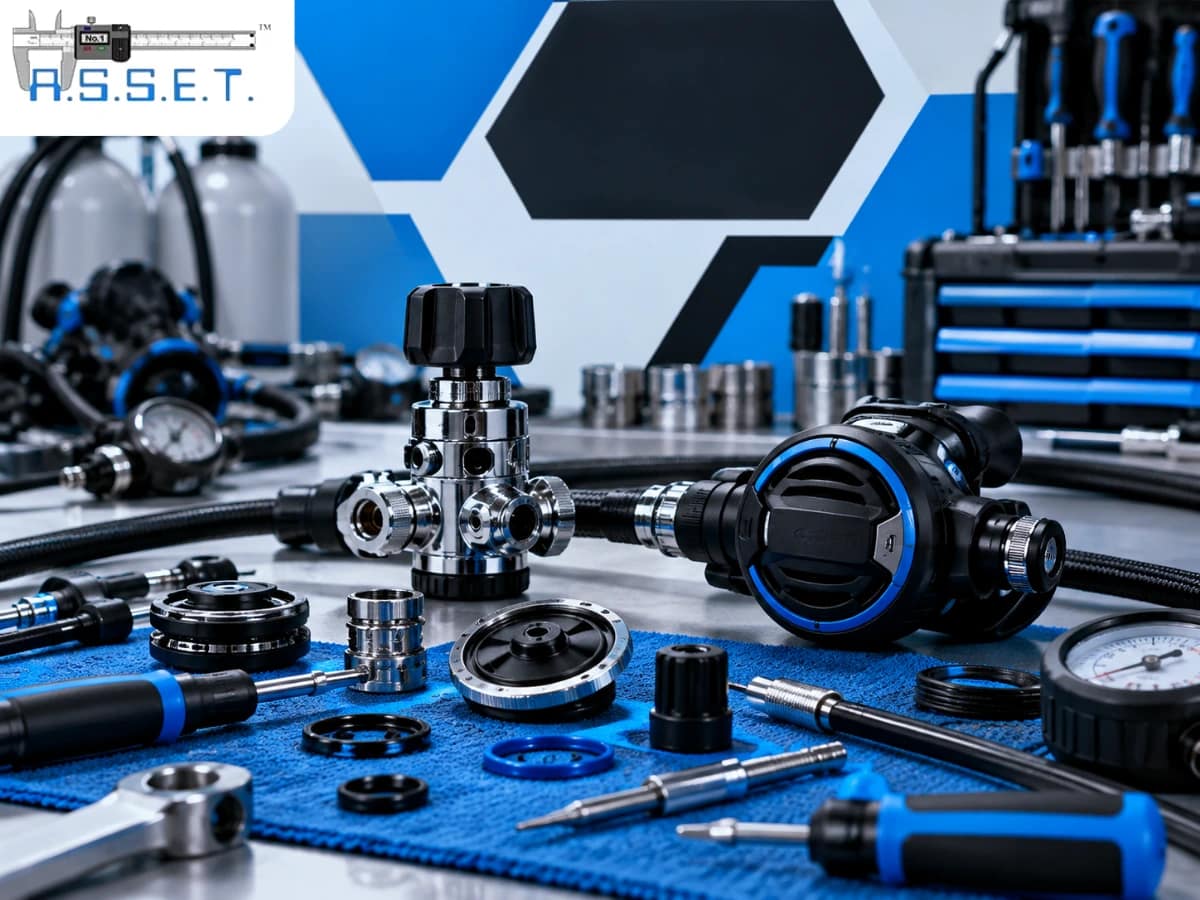
A regulator contains numerous small components. Depending on the design, these can include O-rings, seats, springs, filters, valves, diaphragms and other internal parts. Learning the names of these components is only one part of the process.
A technician also needs to understand the function of each component and recognise signs that may indicate wear or damage. This becomes particularly important during inspection. A component may appear usable at first glance but require closer examination before the regulator is reassembled.
Training allows learners to develop a systematic inspection routine instead of treating every servicing job as a simple parts replacement exercise.
Practical Disassembly Skills
Disassembly is a major part of regulator servicing.
Learners need to understand the correct sequence for removing components and the appropriate tools for the job. Using the wrong tool or applying excessive force can damage components or make later reassembly more difficult. Practical training can introduce learners to regulator-specific service tools, hex keys, screwdrivers, O-ring picks and spanners.
The aim is to develop a controlled workshop process. Components can then be removed, inspected, and organised in a way that supports accurate reassembly. Hands-on work also allows an instructor to identify poor techniques and correct them during the training session.
Cleaning and Inspection
Cleaning is not simply about making a regulator look presentable.
Scuba equipment can be exposed to salt, moisture, dirt, and other contaminants during normal use. Internal components therefore need appropriate cleaning before they are inspected and returned to service. Different materials and components may require different cleaning methods. Training can help learners understand why a particular approach is suitable for a particular component.
Inspection follows cleaning. Components can be examined for corrosion, wear, damage or other conditions that could affect their use.
A systematic inspection process helps ensure that attention is given to the components that matter rather than simply moving through the servicing procedure as quickly as possible.
Learning Correct Lubrication
Lubrication is another area where technical knowledge is needed.
Using an unsuitable lubricant or applying too much can create problems. The correct choice depends on the component, application, and manufacturer’s requirements. Oxygen service also introduces additional considerations, so technicians need to understand the requirements that apply to the equipment they are working on.
The purpose of lubrication is not simply to make components move smoothly. The lubricant needs to be appropriate for the application. It has to be compatible with the materials and service conditions. This is one reason specialist technical training can be useful for people entering equipment servicing.
Reassembly Requires Care
Once inspection and cleaning are complete, the regulator needs to be reassembled according to the applicable technical procedure. Components need to be returned to the correct positions, with appropriate tools and procedures used during assembly.
A good practical session gives learners the opportunity to repeat this process under supervision. It can also help develop consistent workshop habits, such as
- checking a component before installation
- using the correct tool
- following the documented procedure rather than relying entirely on memory
Pressure Testing and Performance Checks
Reassembly does not necessarily mean the servicing process is complete. A regulator needs appropriate testing after servicing. Depending on the regulator and applicable procedure, this may involve checking intermediate pressure, breathing performance, and possible leaks.
Testing requirements can vary according to the equipment manufacturer’s instructions and relevant standards. This makes testing an important part of technician training. It connects the mechanical work carried out during servicing with the performance of the finished equipment.
ASSET’s current Dive Industry Technician syllabus includes regulator performance, pressure-control principles, regulator set-up and adjustment, testing equipment and fault-finding procedures.
Fault Finding Is an Important Technician Skill
Servicing is not always a straightforward sequence of replacing parts. A regulator can display symptoms such as unusual airflow, free flow, leaks, or increased breathing resistance. The technician needs to investigate the possible cause rather than automatically replacing components.
Fault finding requires an understanding of how the regulator works. Training can introduce a systematic approach to investigating symptoms, checking relevant components and using appropriate testing methods.
ASSET’s course material specifically includes fault finding and regulator performance as part of the wider technician syllabus.
Why Manufacturer Information Is Important?
Not every regulator is designed in the same way. Different manufacturers and models may use different components, adjustment methods and servicing procedures. A technician therefore needs to identify the correct technical information for the equipment being serviced.
This is particularly relevant in dive centres and service workshops where equipment from several manufacturers may be handled. Training can help develop the habit of consulting appropriate technical information rather than relying solely on memory or experience with another regulator model.
An ASSET course can provide the broader technical foundation. But manufacturer-specific servicing requirements and access to manufacturer programmes remain separate matters. Completion of an ASSET-approved course does not automatically provide access to a manufacturer’s servicing courses, parts or technical programmes.
Workshop Safety and Documentation
Technical servicing is not limited to mechanical skills.
A professional workshop also needs suitable tools, equipment, procedures and records. Technicians may need to document inspection and servicing work and maintain accurate equipment and calibration records. Workshop safety is another important area. ASSET’s Dive Industry Technician Course includes workshop safety, tools and equipment, documentation, calibration, standards, quality assurance and working procedures.
These subjects may receive less attention than stripping down a regulator, but they form an important part of professional workshop practice.
Who Can Benefit From Scuba Regulator Technician Training?
Training can be relevant to several people working in or around the diving industry, including:
- Dive centre staff
- Dive instructors
- Equipment technicians
- Dive equipment retailers
- Service centre staff
- Dive professionals who want broader technical knowledge
- People planning to work in dive equipment servicing
The appropriate training route depends on the type of work a person intends to carry out, the equipment involved, and any applicable manufacturer or local requirements.
What Is the Practical Training Like?
Practical training allows learners to work with real equipment under supervision. Depending on the course, practical activities may include
- Identifying regulator components
- Selecting appropriate tools
- Disassembling regulators
- Inspecting internal parts
- Cleaning components
- Reassembling equipment
- Adjusting components
- Testing performance
- Investigating faults
ASSET’s current Dive Industry Technician Course combines academic development with workshop experience. Its regulator module includes regulator service and repair, disassembly and assembly, maintenance procedures, and troubleshooting.
This practical element is important because technical servicing involves physical procedures that are difficult to understand fully from theory alone.

Online Learning or Classroom Training?
Some technical programmes use a combination of online or classroom learning and practical workshop sessions. Academic learning can introduce regulatory terminology, diving physics, equipment principles, safety information and technical concepts. Practical sessions then allow learners to apply those principles while working with equipment.
When comparing courses, check the balance between theory and practical work. It is also useful to ask whether practical skills are assessed and what equipment learners will work on. The course format should be considered alongside the syllabus, instructor experience, assessment and technical resources.
What Should You Look For in a Training Course?
Before enrolling in Scuba Regulator Technician Training, consider the following questions:
- Does the course include practical servicing?
Look for supervised work on actual equipment.
- What regulator systems are covered?
Check whether the syllabus includes first-stage and second-stage designs, pressure control, and regulator performance.
- Is fault finding included?
Servicing involves more than replacing standard parts, so troubleshooting can be an important part of technician development.
- Is testing covered?
Find out what performance checks and testing procedures form part of the practical training.
- Does the course cover workshop practice?
Tools, documentation, safety and equipment accuracy can all form part of professional servicing.
- What assessment is involved?
Check whether the programme includes practical assessment as well as theoretical learning.
- What happens after training?
Find out what technical resources, membership or support may be available after completing the course.
How Regulator Training Fits Into the ASSET Technician Pathway?
For someone specifically interested in regulator servicing, it is important to understand that regulator work can form part of a broader dive industry technician qualification.
ASSET’s current Dive Industry Technician Course includes a dedicated regulator service and repair module. The syllabus covers regulator construction and operation, pressure control, first-stage and second-stage designs, refurbishment, regulator performance, adjustment, testing and fault finding.
The course also extends beyond regulators. Its wider programme includes workshop safety, diving physics, equipment maintenance, standards and procedures, documentation, compressor and air systems, cylinder inspection and testing, and other areas of dive equipment servicing. This gives the learner a broader technical foundation rather than treating regulator servicing as an isolated skill.
The current ASSET course combines academic development with workshop experience. The published course is a 10-day programme with four days of academic development and six days of workshop experience. It also includes practical and written assessment.
For someone looking to develop professionally in dive equipment servicing, this distinction is useful. Scuba Regulator Technician Training is an important technical area within a wider technician pathway, rather than assuming a regulator course automatically covers every aspect of dive equipment servicing.
If regulator servicing is your main area of interest, review the regulator module and wider syllabus when considering the ASSET Dive Industry Technician Course. If your longer-term role involves other equipment, the broader curriculum can help you identify which additional areas are relevant to your work.
Continuing Technical Development After Training
Completing technician training is not necessarily the end of technical development. Equipment designs change, manufacturers publish their own technical information, and standards can be updated. Technicians may also decide to expand into areas such as cylinder inspection, compressed air systems, oxygen service or gas blending.
ASSET offers additional technical courses covering areas beyond the core Dive Industry Technician programme. The appropriate next step depends on the technician’s role, existing training and the type of equipment they work with.
The ASSET approach therefore provides a pathway for people who want to build their knowledge across different areas of dive equipment servicing.
Final Thoughts
Scuba Regulator Technician Training involves much more than learning the names of regulator components. A good technical programme should help learners understand regulator design, pressure control, inspection, cleaning, lubrication, disassembly, reassembly, adjustment, testing and fault finding.
Practical training is an important part of that process because learners can apply technical principles while working with real equipment under supervision.
For those considering ASSET training, regulator service and repair is already part of the current Dive Industry Technician Course. The programme places regulator work within a wider technical syllabus that also covers workshop practice, standards, documentation, equipment maintenance and other areas of dive equipment servicing.
Before choosing a training route, look closely at the actual curriculum, practical component, assessment and technical resources rather than relying on the course title alone.
If your goal is to develop professional skills in scuba equipment servicing, reviewing the ASSET Dive Industry Technician Course is a useful next step. For complete information, connect with the Dive Technician team,
FAQs
What is Scuba Regulator Technician Training?
Scuba Regulator Technician Training teaches the technical principles and practical procedures involved in inspecting, servicing, testing, and troubleshooting scuba regulators.
What does a regulator technician learn?
Training can cover regulator design, pressure control, component inspection, disassembly, cleaning, lubrication, reassembly, adjustment, performance testing and fault finding.
Is practical training important for regulator servicing?
Yes. Regulator servicing involves physical equipment, specialised tools and precise procedures. Supervised practical training allows learners to apply technical knowledge while working with actual equipment.
Does the ASSET Dive Industry Technician Course cover regulator servicing?
Yes. The current ASSET Dive Industry Technician Course includes a regulator service and repair module covering regulator types, components, disassembly and assembly, maintenance procedures and troubleshooting. The wider syllabus also covers regulator performance, refurbishment, adjustment and testing.
Does completing ASSET training provide manufacturer-specific servicing authorisation?
Not automatically. ASSET’s training and certification are separate from individual manufacturers’ own servicing programmes, policies and access to parts or technical information. Technicians should check the requirements that apply to the specific equipment they intend to service.