ASSET Scuba Service Technician: What Employers Look for in a Trained Technician?
A dive centre depends on equipment that works correctly every time a diver enters the water. Regulators need proper servicing. Cylinders require careful inspection. Compressed air systems must receive the right care. These tasks need people with suitable technical knowledge and practical abilities.
For employers in this industry, finding an expert who understands this responsibility is important. A person may know a great deal about diving. But they still need specialist training before working on scuba equipment. Employers need evidence of
- technical ability
- safe working habits
- willingness to follow recognised procedures
The ASSET Scuba Service Technician qualification is for people who want to learn these things. Through Dive Technician’s training programmes, students can develop practical knowledge of equipment servicing. They learn about the factors expected in a specialised workshop.
Why Employers Value Proper Technician Training
Scuba equipment is life-support equipment. A mistake during servicing can affect its performance. It can put a diver at risk. Employers therefore need experts who understand more than the basic parts of a regulator and cylinder.
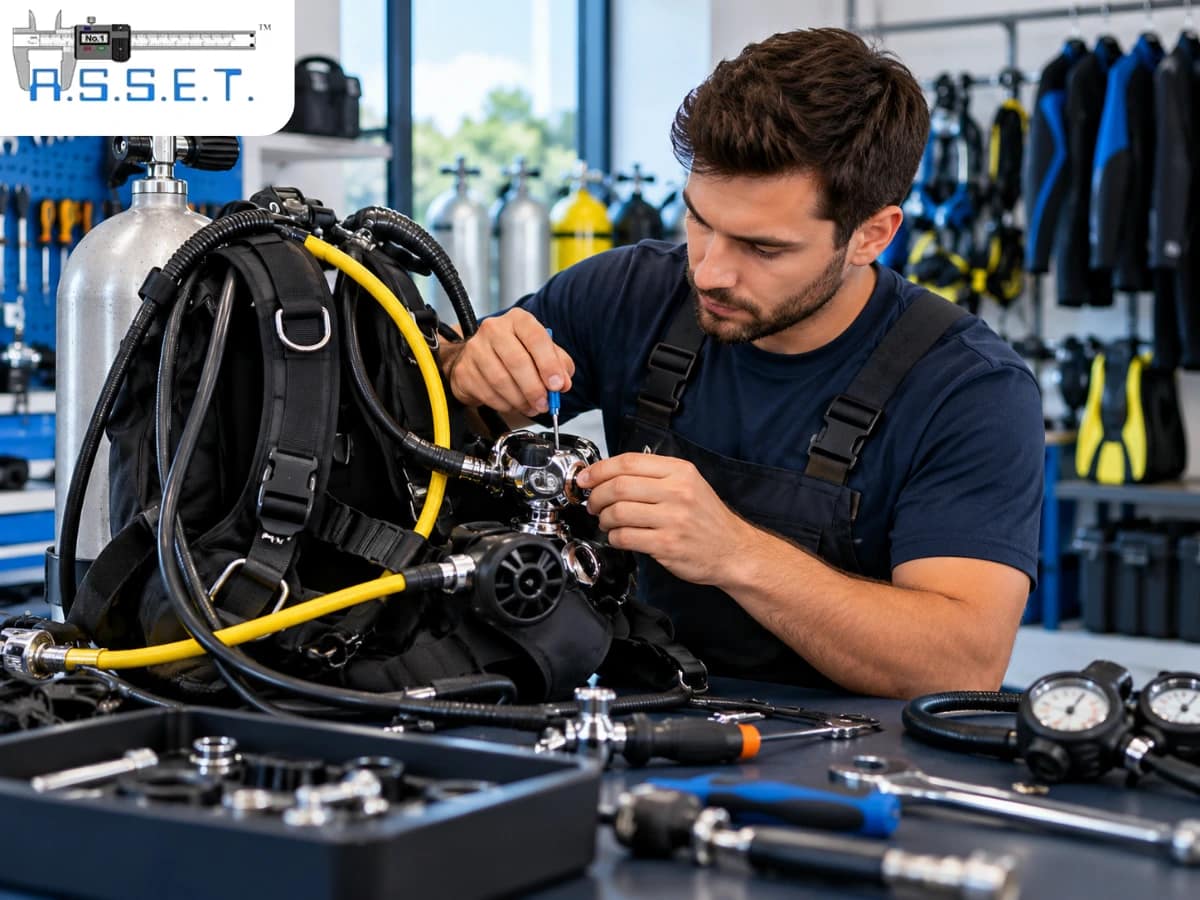
Formal training gives students a proper way to learn tool maintenance. It introduces them to technical procedures. It helps them understand why each step is important. Practical sessions also give them the chance to work with these tools under supervision. Dive Technician provides training through ASSET, the Association of Scuba Service Engineers and Technicians. Our Dive Industry Technicians Course is designed to develop the expertise needed for professional equipment servicing. The programme covers areas such as
- regulator servicing
- cylinder inspection principles
- valve servicing
- workshop safety
- technical documentation
For employers, this type of preparation can provide a good starting point when assessing a candidate’s suitability for technical work.
ASSET Scuba Service Technician- Expertise That Employers Need
1. Practical Knowledge of Scuba Equipment
The expert must have a sound understanding of the equipment they may handle. Regulators control the delivery of breathing gas to a diver. So they have to be in good condition. A technician must understand the different components. They must follow the correct servicing procedures for the equipment.
Cylinder valves also need maintenance. Their condition can affect their safe use. This makes inspection and servicing important. Buoyancy control devices (BCDs) are a part of scuba equipment. They may require examination and upkeep. Experts need to understand their components. They must recognise signs of damage and poor function.
Dive Technician’s ASSET training introduces students to several of these areas. This technical foundation can help candidates prepare for roles in different places. Employers will still assess the equipment knowledge needed for a particular position. Training provides a foundation. Continued practice helps the experts build their ability.
2. Safe and Careful Working Habits
Technical knowledge is only one part of the job. Employers also need people who take safety seriously. A technician must work carefully when handling pressurised equipment and its components. Rushing through an inspection and skipping a required check can lead to problems. A safe approach means following approved procedures. It also means recognising when a task needs care.
Workshop safety also includes
- using tools correctly
- keeping the work area organised
- handling parts in a proper way
Technicians should know the limits of their training. They must take help when a task falls outside their competence. Dive Technician training includes workshop safety within its wider technical training. This helps students understand that equipment servicing requires discipline.
For employers, these habits can be just as valuable as mechanical ability. A person who works carefully and follows procedures is better prepared to take responsibility for safety-critical tasks.
3. Understanding of Inspection and Testing
Employers need technicians who can recognise potential problems before equipment returns to use. This requires a methodical approach to inspection and testing. A cylinder inspection may involve checking the cylinder’s condition. It will be about identifying signs of damage and deterioration. Technicians need suitable training to recognise issues that require assessment.
Testing must also follow the correct procedures for the equipment and task. An inspection is not the same as a hydrostatic test. One must not be treated as a replacement for the other. Dive Technician provides dedicated ASSET training in cylinder visual inspection and hydrostatic testing.
These programmes provide a route for people who want to develop specialist knowledge. Employers may value this additional preparation when a role involves cylinder inspection and testing. But the duties a technician can perform depend on their actual training and qualifications
4. Familiarity With Technical Standards
An expert needs to understand that equipment servicing is steered by practical requirements. Employers want people who can follow the proper procedures. They don’t want the expert to rely on guesswork and preference.
ASSET’s training approach refers to recognised standards relevant to scuba equipment and breathing-air systems. These include
- EN 250 for breathing apparatus performance
- EN 12021 for breathing air quality
- ISO 18119 for periodic inspection and testing of gas cylinders
Each standard serves a particular purpose. A technician needs to understand which requirements apply to the equipment and task at hand. This knowledge helps build a more consistent approach to servicing. It also supports better communication between technicians and other people responsible for equipment safety.
Dive Technician places emphasis on standards-based technical training. Students can use this foundation to understand why the following things are important
- approved procedures
- correct testing
- careful record-keeping
5. Accurate Records and Technical Documentation
Servicing does not end when a technician finishes working on a piece of equipment. Appropriate records also form part of expert practice. Documentation can include work completed, inspection findings, and test results.
It can help a workshop track equipment history. It can help identify when further care may be needed. Employers value experts who understand the importance of accurate records. Missing details and unclear entries can make it difficult for another person to understand what work has taken place.
A good technician should record information and follow the workplace’s record-keeping procedures. They should never claim that a test and service has been completed if it is not. Dive Technician includes documentation within its broader training approach. This supports the development of responsible working habits. It helps students understand the role of traceability in equipment maintenance.
6. Finding Faults and Working Systematically
Employers also look for experts who can approach equipment problems in a proper way. A fault may be due to many reasons. The expert must not replace parts without proper checks. They need to follow an appropriate inspection and diagnostic process. This begins with understanding the reported problem. They then use the correct procedures to
- inspect the components
- identify possible faults
- determine the next suitable step
Practical training helps students in the following ways
- They become familiar with components
- They understand the servicing processes
- It also teaches them to check small details that may affect equipment performance.
The aim is not to encourage guesswork and repairs outside a person’s capability. An expert should know when to take advice. They must know when to refer a problem to someone with the required competence. Through practical workshop learning, Dive Technician helps students develop a foundation for this approach.
7. Knowledge of Compressed Air Systems
Some technical roles involve more than servicing individual pieces of diving equipment. Dive centres and filling facilities may also need staff with knowledge of compressors and breathing-air quality. These systems require proper operation and maintenance. The following things can create serious concerns for breathing-air supplies.
- Moisture
- Contamination
- Unsuitable air quality
Employers may therefore look for experts who understand the basic requirements of compressor operation and air-quality management. The exact level of knowledge needed will depend on the role. Dive Technician offers an ASSET Compressed Air Systems Management course. Our training options also include compressed breathing-air testing and advanced compressor maintenance. These programmes provide opportunities for technicians to develop specialist knowledge in this area.
They may be useful for people working in facilities where compressor operation and breathing-air management form part of their duties.
8. A Commitment to Continued Learning
The diving equipment industry includes different manufacturers and equipment models. There are different technical requirements. A technician’s initial training provides a foundation. But developing expertise is important. Employers want people who are willing to update their knowledge and follow current servicing information. They should be prepared to learn new procedures. They must be ready to understand the requirements of the equipment they are authorised to service.
ASSET training provides a starting point for further development. Dive Technician’s wider course range includes specialist options for
- cylinder inspection
- hydrostatic testing
- compressed air systems
- oxygen servicing
- gas blending
Not every expert needs every qualification. The right learning path depends on the equipment handled and the responsibilities of the job. A willingness to improve can help technicians build a better profile.
What Employers Look for at a Glance
| Priority | Importance |
| Practical equipment knowledge | Helps technicians understand servicing tasks |
| Safe working habits | Supports responsible handling of life-support equipment |
| Inspection and testing skills | Helps identify faults and equipment concerns |
| Knowledge of standards | Encourages consistent, procedure-led work |
| Accurate documentation | Supports traceability and equipment records |
| Fault-finding ability | Helps technicians assess problems methodically |
| Compressed-air knowledge | Supports roles involving compressors and breathing air |
| Continued learning | Helps technicians keep their skills relevant |
Why Consider Dive Technician’s ASSET Training?
People interested in a technical career may come from different backgrounds. Some already work as dive instructors or divemaster’s. Others work in dive centres. Some may want to move towards equipment servicing.
Dive Technician offers the ASSET Dive Industry Technicians Course as a foundation for technical development. The course information provides practical training. There are technical subjects related to equipment maintenance.
We have separate programmes for people who want to develop specialist abilities. These include
- cylinder inspection and testing
- compressed air systems management
- oxygen servicing
- gas blending.
This range gives students a way to consider training according to their needs. Before enrolling, prospective students should review the course content, practical requirements, and qualification details.
They should also check which training route matches the work they want to undertake. An ASSET qualification can support an expert profile. But employment depends on several factors. Employers may also consider practical experience, communication skills, local requirements, and specific responsibilities of the vacancy.
Final Thoughts
Employers in the diving industry need technicians who understand the responsibility involved in maintaining life-support equipment. The following things contribute to expert competence.
- Practical knowledge
- Safe working habits
- Inspection skills
- Accurate documentation
The ASSET Scuba Service Technician course can help aspiring technicians develop a foundation in these areas. For this, they can rely on Dive Technician’s training programmes. Additional courses can support further learning in cylinder testing, compressed air systems, and other specialist fields. A certificate is a starting point. It is not a substitute for proper work. The strongest candidates are those who apply their training responsibly. They recognise the limits of their competence. They remain willing to learn.
Ready to develop your technical skills? Visit Dive Technician to review the ASSET Dive Industry Technicians Course.
FAQs
What is an ASSET Scuba Service Technician?
An ASSET Scuba Service Technician is a person trained in the technical skills required for scuba equipment servicing. The training helps students understand equipment maintenance, inspection procedures, and workshop safety.
What skills do employers look for in a scuba service technician?
Employers look for practical equipment knowledge, safe working habits, fault identification skills, and an understanding of technical standards. Accurate documentation and a willingness to keep learning are also valuable.
What does the ASSET Dive Industry Technicians Course cover?
The course covers technical subjects related to scuba equipment servicing. Depending on the programme, training areas may include regulator servicing, cylinder inspection principles, valve servicing and workshop safety. Check Dive Technician’s current course details for the complete syllabus.
Can scuba service technicians work at dive centres?
Yes. Depending on their training and experience, technicians may pursue opportunities at dive centres, equipment service workshops and diving equipment businesses. Specific duties depend on the employer’s requirements and the technician’s qualifications.
Does ASSET training include cylinder inspection and compressed-air systems?
Dive Technician lists specialist courses covering cylinder inspection, hydrostatic testing and compressed-air systems management. These provide further training options for people who want to develop skills in these areas.