Your Path to Success Starts Here: Dive Industry Technicians Course
Dive Industry Technicians Course

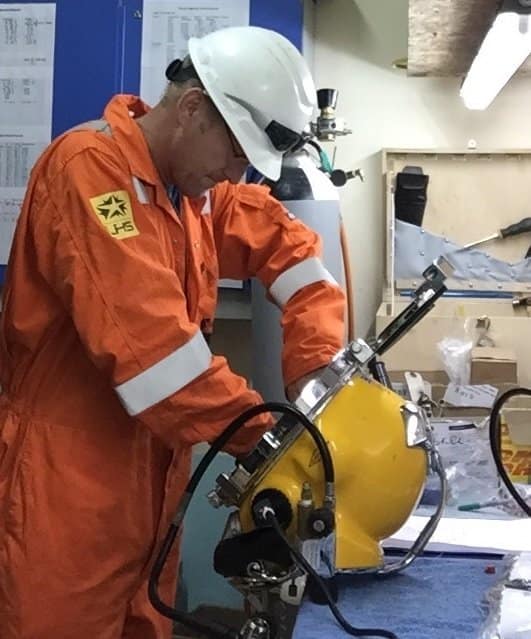
‘Dive Industry Technicians Course. highly practical course, with hands-on experience in a real cylinder testing workshop. The Must have course for the diving professional’
The ASSET Dive Industry Technicians Course is a comprehensive training program designed for individuals seeking to enhance their technical skills in the diving industry. This course covers essential topics such as equipment maintenance, repair techniques, and safety protocols, ensuring participants are well-equipped to handle various diving apparatus. With a blend of theoretical knowledge and practical application, students will gain valuable insights into industry standards and best practices, preparing them for a successful career in diving technology. Enroll now to elevate your expertise and contribute to the safety and efficiency of diving operations.
- Course Fees €1700
- Course Dates (January – March 2025)
- Syllabus
- Course duration: 10 days
- Academic development: 4 days (Online or Classroom)
- Workshop experience: 6 days
Course Overview
This 10-day Dive Industry Technicians Course is designed for individuals seeking to gain in-depth knowledge and practical skills related to the service, repair, and operation of diving equipment and related technologies. The course comprises 9 structured modules that emphasize hands-on learning, alongside theoretical instruction. Successful completion of the course will certify participants as qualified dive industry technicians.
Course Objectives
By the end of the course, participants will be able to:
- Understand and apply workshop safety protocols.
- Diagnose and service various diving equipment effectively.
- Operate compressors and manage air quality in compliance with industry standards.
- Set up and maintain a professional workshop environment.
- Adhere to warranties and customer care standards.
- Understand relevant regulations and standards pertaining to underwater operations and equipment.
Module Breakdown
Day 1: Introduction & Workshop Safety
- Overview of the Dive Industry Technicians Course
- Course objectives and expectations
- Introduction to handouts and the Dive Industry Technicians Handbook
- Overview of the Dive Industry Technicians Course
- Workshop Safety Protocols
- Personal protective equipment (PPE)
- Tool safety and maintenance
- Emergency procedures and first aid
- Workshop Safety Protocols
Day 2: Physics of Diving-Related Plant and Equipment
- Fundamentals of Diving Physics
- Pressure and buoyancy principles
- Gas laws applicable to diving
- Dive equipment mechanics
- Fundamentals of Diving Physics
- Overview of Dive Equipment
- Types of diving equipment and their functions
- Overview of Dive Equipment
Day 3: Regulator Service and Repair
- Understanding Regulators
- Different types of regulators (single stage, two-stage)
- Components and functioning of a regulator
- Understanding Regulators
- Hands-On Practice
- Disassembly and assembly of regulators
- Maintenance procedures and trouble-shooting techniques
- Hands-On Practice
Day 4: Equipment Theory – Design and Construction
- Diving Equipment Design Principles
- Materials used in diving equipment
- Ergonomics and efficiency in design
- Diving Equipment Design Principles
- Hands-On Work
- Comparative analysis of different equipment designs
- Hands-On Work
Day 5: Compressor and Air Banks – Operation and Air Quality
- Introduction to Compressors
- Types of compressors used in diving
- Operating principles and maintenance
- Introduction to Compressors
- Air Quality Standards
- Importance of air quality in diving
- Testing and monitoring air quality
- Air Quality Standards
- Hands-On Practice
- Operating a compressor
- Conducting air quality tests
- Hands-On Practice
Day 6: Setting Up a Professional Workshop
- Workshop Layout and Design
- Essentials of a well-organized workshop
- Tools and equipment inventory
- Workshop Layout and Design
- Professional Practices
- Time management and project scheduling
- Record-keeping and documentation
- Professional Practices
Day 7: Working Practices, Standards, and Procedures
- Industry Standards Overview
- Certifications and standards relevant to the dive industry
- Best practices for service and repair
- Industry Standards Overview
- Hands-On Application
- Case studies and real-world scenario debriefs
- Hands-On Application
Day 8: Warranties and Customer Care
- Understanding Warranties
- Types of warranties and their implications
- Handling warranty claims and repairs
- Understanding Warranties
- Customer Care
- Importance of customer service in the dive industry
- Communication skills and complaint resolution
- Customer Care
Day 9: Regulations and Standards
- Key Regulations Affecting the Dive Industry
- National and international dive safety regulations
- Compliance and inspection processes
- Key Regulations Affecting the Dive Industry
- Workshop Compliance
- Ensuring that workshop practices meet regulatory standards
- Workshop Compliance
Day 10: Cylinder Testing
- Cylinder Design and Maintenance
- Types of cylinders and their uses
- Importance of regular testing and certification
- Cylinder Design and Maintenance
- Hands-On Testing
- Procedures for testing diving cylinders
- Understanding testing results and reporting
- Hands-On Testing
Assessment and Certification
- Practical Exam: Participants will demonstrate their skills in servicing and repairing dive equipment.
- Written Exam: Participants will complete a written assessment covering theoretical aspects of the course.
- Certification: Successful participants will receive certification from ASSET, SITA, and IDEST.
Resources
- Dive Industry Technicians Handbook (provided)
- Access to workshop tools and equipment
- Supplementary reading materials and online resources (As an ASSET Member)
Additional Notes
- Participants should bring/wear appropriate workshop coveralls.
- Bring personal diving equipment for practical sessions (if applicable).
- Refreshments will be provided daily.
This comprehensive syllabus ensures participants receive a balanced education in theory and practice, preparing them for a successful career in the dive industry.
Dive Industry Technicians Course is a highly practical course, with hands-on experience in a real technical workshop. The course is led by an instructor with 30 years of offshore engineering and scuba repair experience.
The dive industry technicians course materials is fully illustrated with high-quality detailed pictures. The DITC manual is included in the course, this is your encyclopedia of examples cutaway pieces of equipment, available for students to view throughout the course. This course is an ideal way for you as a Divers Life Support Equipment Technician, to gain the only Nationally recognized qualification IN SERVICE AND REPAIR OF DIVING EQUIPMENT and become a qualified, highly sought-after professional Technician.
PADI Instructors – This course is recognized by PADI for Equipment Specialist Instructor rating – fulfill PADI’s requirements & submit your certificate of training to PADI.
This is the only course that is approved by the 3 major standards and representative bodies in the industry:
- ASSET – Association of Scuba Service Engineers & Technicians
- IDEST – Inspectorate for Diving Equipment Servicing and Testing
- SITA – UK Scuba Industries Trade Association
In addition, the British Health and Safety Executive has stated that they consider dive industry technicians course to be a core training program for their diving inspectors.
Key Benefits of the Dive Industry Technician Training Course (DITC)
- Provide a thorough background in Dive Equipment repair for the technician.
- includes ASSET Cylinder Visual Inspection Course CPL1 (2 days)
- includes Compressed Air Systems management (compressor operator) Course CASM (2 days)
- Scuba Dive Centres always needs someone to repair the Scuba equipment used in the dive centre. Formal training & experience of scuba equipment repair can greatly assist the dive professional in finding work within a competitive commercial & recreational dive industry recruiting markets.
COURSE FEE INCLUDES:
- ONSITE TRAINING ACADEMIC AND WORKSHOP PRACTICE
- CERTIFICATION-CARD
NOTES
- Students who have completed the online training course and passed online final exams at the required pass grade.
- Are considered to have met the academic requirements for their chosen practical training course.Can chose to attend workshop training (if required) within one year of the online classwork course completion date. Can chose to complete the academic topics covered in the online course again, in a formal classroom teaching environment.
- Are required to have their own personal copy of the student training course materials in printed format.
- Students who have completed the online training course and passed online final exams at the required pass grade.
What Will I Learn?
- The Dive Industry Technicians Course is a comprehensive training program designed for individuals seeking to enhance their technical skills in the diving industry. This course covers essential topics such as equipment maintenance, repair techniques, and safety protocols, ensuring participants are well-equipped to handle various diving apparatus. With a blend of theoretical knowledge and practical application, students will gain valuable insights into industry standards and best practices, preparing them for a successful career in diving technology. Enrol now to elevate your expertise and contribute to the safety and efficiency of diving operations.
Course Content
Dive Industry Technicians Course
-
Introduction
-
Acknowledgements
-
About the Author
-
Course Programme
-
Glossary: Units and Terminology
-
Conventions
-
Gas Laws and the Behaviour of gases
-
Air
-
Nitrogen (N2)
-
Oxygen (O2)
-
Carbon Dioxide (CO2)
-
Carbon Monoxide (CO)
-
Helium (HE)
-
The Behaviour of Gases
-
Gas Molecules Exert Equal Force
-
Boyle’s Law. (Robert Boyle)
-
Boyle’s Law (i)
-
Boyle’s Law (ii)
-
Boyle’s Law (iii)
-
Density
-
The Ideal Gas Law
-
The Ideal Gas Law (i)
-
Ideal Gas Law (ii)
-
The Joule – Thompson Effect
-
Dalton’s Law (John Dalton)
-
Stored Energy
-
Tools, Equipment and Documentation
-
Tools
-
Inappropriate Tools
-
Special Tools
-
General Workshop Equipment
-
Cylinder Inspection Equipment
-
Measuring
-
Hydraulic Testing, Cleaning and Drying Equipment
-
Calibration – General
-
Calibration – The Master and Working Gauges
-
Working Gauge Calibration Form
-
Working Gauge Calibration
-
Working Gauge Calibration Form
-
Documentation
-
Record Keeping
-
Refurbishment Procedure
-
SET UP AND ADJUSTMENT
-
Fault Finding
-
Fault Finding by Substitution
-
Quality Assurance
-
Alternative Spare Parts
-
“Should I Attempt to Service Everything”?
-
Common Errors
-
Inspection of Equipment Used at Work
-
Regular serviceability check
-
Standards, Codes of Practice, Inspection and Approval
-
A Summary of a Typical ASSET Code of Practice – CP2
-
1. SCOPE (TYPE OF STATION)
-
2 ORGANISATION
-
3 QUALIFICATIONS AND TRAINING
-
4. ESSENTIAL TOOLS, EQUIPMENT AND FACILITIES
-
5. EQUIPMENT ACCURACY AND CALIBRATION
-
6. DOCUMENTATION
-
7. QUALITY ASSURANCE
-
8. PROCEDURES
-
9. RECORDS AND DOCUMENTATION
-
Health and Safety in the Workshop
-
4. Working Principles and Refurbishment of SCUBA Regulators
-
An Effective Technician
-
The Principles of Pressure Control
-
Changing Applied Forces
-
Closed 2nd Stage Valve
-
Open 2nd Stage Valve
-
Improving and Limiting Air Flow
-
Refurbishment Requirements
-
Filter Materials
-
Compensating for Ambient Pressure
-
Design Considerations
-
Unbalanced 1st Stage
-
Balanced 1st Stage
-
Balancing
-
1st Stages
-
Unbalanced Piston 1st Stage
-
Balanced Piston 1st Stage
-
Unbalanced Diaphragm 1st Stage
-
Balanced Diaphragm 1st Stage
-
2nd Stages
-
Typical Downstream 2nd Stage
-
Typical Upstream 2nd Stage
-
Typical Balanced 2nd Stage
-
Servo or Pilot 2nd Stage
-
Regulator Performance
-
WHAT IS “REGULATOR PERFORMANCE”?
-
The Pressure Volume Loop
-
Pressure Volume Diagram (at 65m)
-
Modern PV Diagrams (at 50m)
-
Air Flow through an Orifice
-
Performance Enhancement
-
Interstage Pressure Boosting
-
Effects of Pressure Boosting
-
Over-tracking
-
Reducing Inhalation Resistance
-
Venturi Assistance
-
Tube Injector Venturi
-
Vortex Venturi
-
Curved Plate Venturi
-
Directed Jet Venturi
-
Cold water Performance
-
Antifreeze Systems – First Stage (i)
-
Antifreeze Systems – First Stage (ii)
-
Antifreeze Systems – 2nd Stage (i)
-
Antifreeze Systems – 2nd Stage (ii)
-
Antifreeze Systems – 2nd Stage (iii)
-
O Rings
-
Refurbishment Procedure
-
Manipulating 1st Stage Bodies
-
Removing O-rings
-
Replacing O-rings
-
Regulator Set Up and Adjustment.
-
2nd Stage Adjustment – Fixed Orifice
-
2nd Stage Adjustment – Fixed Lever
-
2nd Stage Adjustment – Both Adjustable
-
Testing Equipment
-
Safety Reminders
-
Maintaining Other Equipment
-
Buoyancy Control Devices (i)
-
Buoyancy Control Devices (ii)
-
Probes and Combined AAS’
-
The Bourdon Tube Principle
-
Analogue Depth Gauges
-
Digital Instruments & Computers
-
Battery Life
-
Torches
-
Cameras, Strobes and Watches
-
The Pressure Test Chamber
-
Dry Suit Inlet Valve
-
Dry Suit Cuff & Auto Exhausts
-
Cylinder Valves
-
Inspection and Refurbishment
-
Disassembly
-
Replace Valve, if:
-
Construction
-
Cleaning Procedure
-
Re-assembly
-
Thread Forms
-
Thread Forms – (i)
-
Thread Forms – (ii)
-
Thread Forms – (iii)
-
Thread Forms – (iv)
-
Avoiding a Dangerous Mismatch (i)
-
Avoiding a Dangerous Mismatch (ii)
-
Tolerance and Fit
-
Thread Gauging
-
Gauging Parallel Threads
-
Gauging Taper Threads
-
Fitting Parallel Valves
-
Incompatible Connections
-
Fitting Taper Valves
-
Tightening Torque
-
Pressure Compatibility
-
Plug or Neck Insert (Adaptor)
-
Safety Reminders
-
Cylinder Inspection & Hydraulic Testing (CTC Pt. 1)
-
Background
-
Definitions
-
EU Directives
-
Manufacturing Standards
-
Obsolete Approved Standards
-
USA Standards
-
Inspection & Testing Standards
-
EN ISO 18119 Includes
-
Associated Standards
-
Inspection & Test Periods
-
Cylinder Inspection Procedure
-
Confirm the Cylinder is Empty
-
Dealing with a Blocked Valve
-
Repair and Replacement
-
Preparation – Valve Removal
-
Cylinder Neck Inspection
-
Eddy Current Testing
-
External Examination
-
Compulsory Zinc Coating?
-
Measuring External Defects
-
Internal Examination
-
Evaluating Internal Defects
-
Measuring Wall Thickness
-
Internal Cleaning – Tumbling
-
Shot Blasting
-
Rejection Criteria
-
Table 6-1. Précis of EN 18119 Table B1
-
Table 6-1. Précis of EN 18119 Table B1
-
Table 6-2. Précis of EN 18119 Table B2
-
Hydraulic Testing
-
Volumetric Jacket – Fixed Burette
-
Volumetric Levelling Burette
-
Volumetric Weighed Water
-
Volumetric Non-jacket Method
-
Proof Method
-
Supplementary Tests
-
Drying Cylinders
-
Refitting the Valve
-
Stamp Marking and Labelling
-
Refinishing
-
QA. Reject and repair or Condemn and Render Unserviceable
-
Identify Contents – EN 1089 Pt 3
-
Identify Contents – EN ISO 7225
-
Can Any Cylinder be Tested?
-
Safety Reminders
-
Wet & Dry Suit Repair
-
Common Materials
-
Adhesive Repair Techniques
-
Typical Adhesives
-
Preparation and Application
-
Fitting a Membrane Cuff Seal
-
Fitting a Membrane Neck Seal
-
Fitting a Dry Zip
-
Safety Reminders
-
Compressors and Air Storage Systems
-
Regulations (1)
-
Pressure Systems Safety Regulations
-
Operators Instructions (Reg 11)
-
Information and Markings (Reg 5)
-
Compressed Air System Theory
-
Single Stage Compression
-
Pressure Volume Diagram
-
Multi-stage Compression
-
Compressor Efficiency
-
Compressor Output
-
A 3 Stage HP Compressor
-
Separator / Filter Unit
-
Filtration
-
Filter Composition
-
Filter Duration
-
Air Quality
-
Air Quality (ii)
-
Hand Held Monoxide Detector
-
Air Analysis (i)
-
Air Analysis (ii)
-
Air Analysis (iii)
-
Lubrication
-
Explosion and Combustion Hazard
-
Handling Cylinders
-
Inspection Before Filling
-
Mismatched Cylinders and Valves
-
Compressor Use
-
Air Storage Systems & Decanting
-
Safety and Training
-
Maintenance and Record Keeping
-
Check Drive Belt Tension
-
Pulley Alignment
-
Compressor Drive and Control
-
The Electrical Supply
-
Electric Motor Characteristics
-
3 Phase Motor Connections
-
Electrical Protection
-
Safety Reminders
-
Health and Safety & Trading Standards
-
The Diving Operation
-
Potential Hazards
-
Health and Safety at Work Act
-
Health and Safety at Work Act 1974
-
Why is Legislation Needed?
-
Why is Legislation Needed?
-
Diving at Work Regulations
-
General Regulations
-
Control of Substances Hazardous to Health Regulations
-
Regulations
-
Reporting of Injuries Diseases and Dangerous Occurrences Reg’s
-
HSE Action
-
Trading Standards
-
Trading Standards (i)
-
Trading Standards (ii)
-
General
About the instructor
12 Courses
6 students
There's a lot of sentences missing parts.
I tried to open the course on a lot of different devices and navigators but that did not solved the issue.
It's especiallly frustrating when it comes to technical sections.
It's not even about filling blanks some part are devoided of meaning.
I can't wait to get the practical part done to clarify what was not covered here.
Attended the ASSET Dive Industry Technician course and was impressed by how much was you could learned in such a short time. The training given in confidence working on standards and equipment straight away.
Great course. Love the practical side of the training. Planning on joining another course soon!
Material Includes
- The course material is fully illustrated with high-quality detailed pictures and example cutaway pieces of equipment.