
Scuba Equipment Service Certification: A Complete Guide for Technicians
A diver may notice a regulator/cylinder/BCD only when something feels wrong. A trained technician sees the problem much earlier.
Every piece of scuba equipment needs careful inspection. It needs correct servicing and proper testing. Small errors can affect equipment performance and diver safety. This makes technical knowledge a serious part of this industry. A recognised Scuba Equipment Service Certification can help technicians build that knowledge through proper training and practical work. It can also give dive centres a stronger technical resource.
This blog explains the main skills and training areas. It also talks about the professional benefits that technicians should consider before choosing a programme.
What Does a Scuba Equipment Service Technician Do?
This expert works behind the scenes to keep diving tools safe and functional. The role involves much more than taking equipment apart and putting it back together. A technician needs to understand the purpose of each component. They also need to spot the following things.
- Wear
- Contamination
- Damage
- Incorrect assembly
Typical responsibilities can include
- Inspecting scuba equipment and identifying faults
- Servicing regulators and related components
- Inspecting cylinder valves and cylinders
- Checking BCD systems and inflators
- Working with compressed-air systems
- Following technical procedures and safety requirements
- Recording service work and inspection results
The technician must work with care. This is because scuba equipment supports a diver underwater. Guesswork has no place in this type of work.
Our training is a combination of online learning and practical training. The programme focuses on
- equipment maintenance
- cylinder and valve servicing
- wider technical skills needed within the diving industry
What Does Scuba Equipment Service Certification Cover?
It can include several areas rather than one item of gear. A strong programme should combine technical knowledge with practical experience.
| Training area | Key skills developed |
| Regulators | Inspection, servicing, cleaning, rebuilding, fault finding |
| Cylinders | Visual inspection, damage assessment, testing principles |
| Valves | Disassembly, cleaning, component checks, safe reassembly |
| BCDs | Inflator servicing, leak checks, component inspection |
| Compressed air | System awareness, air quality, safe operation |
| Workshop practice | Tools, procedures, documentation, safe working |
The exact modules depend on the course. Dive Technician offers dedicated training in
- cylinder visual inspection
- composite cylinder inspection
- compressed-air systems
- oxygen and Nitrox systems
- gas booster maintenance
This wider knowledge can help a technician understand the complete equipment chain rather than focus on one isolated component.
Why Practical Training Is Required?
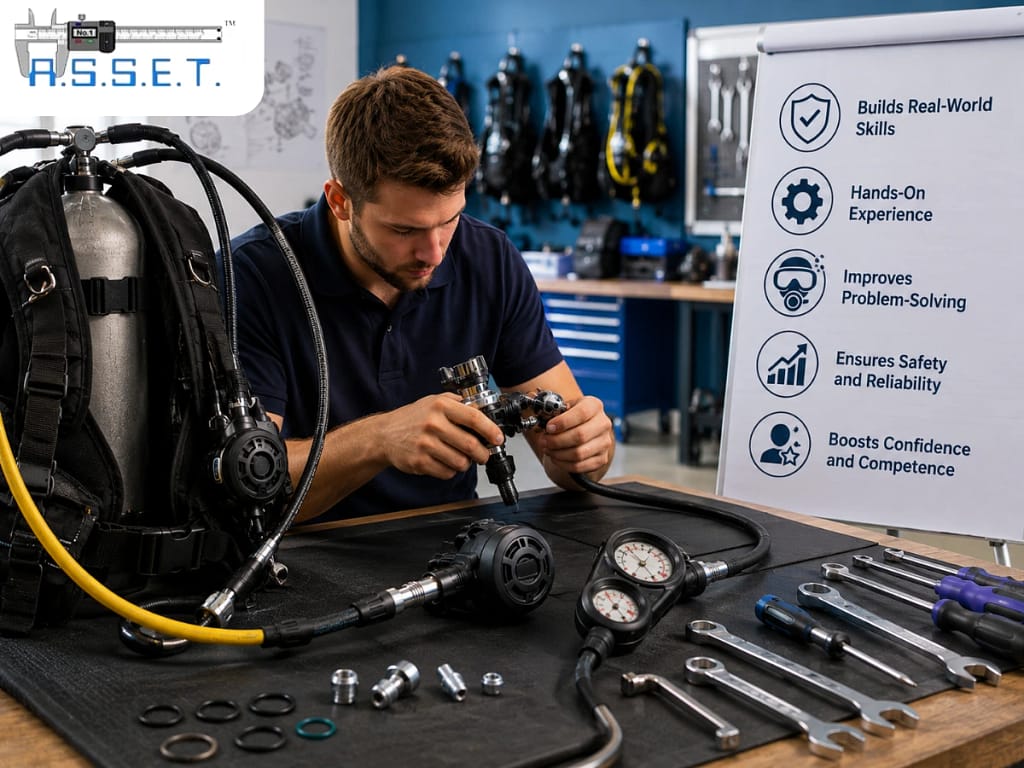
Technical manuals provide useful information. But technicians also need practical experience. A learner may understand the theory behind a regulator service. That does not automatically mean they can identify a worn component. It also does not mean that they can use workshop tools correctly and spot an assembly problem. Practical sessions give learners the chance to work with real equipment under instruction. They can repeat procedures. They can ask questions and develop better fault-finding habits. Our courses combine online teaching with in-house practical training. This is followed by certificates of participation and completion.
This approach also helps learners understand the difference between simply completing a procedure and completing it correctly.
The Main Equipment Areas Technicians Should Understand
Regulators
They require precise servicing. This is because they control breathing gas delivery. Technicians need to understand the components. They also need to understand the pressure systems and service procedures involved.
Training can cover
- Disassembly
- Cleaning
- Inspection
- Reassembly
- Adjustment
- Testing
Fault finding also forms an important part of the learning process.
Cylinders and Valves
This is an important thing. Cylinder work requires careful inspection. You need a strong understanding of testing requirements. Technicians need to recognise signs of corrosion and damage. They need to check for other defects. Valve servicing also requires correct component inspection and safe reassembly.
Dive Technician offers separate cylinder visual inspection training and ISO 18119 update training. This shows the importance of continued technical learning in this area.
BCDs and Other Systems
Technicians may also work with
- BCD inflators
- Hoses
- Valves
- Other related components
A fault in one small component can affect the diver’s equipment during use. A broad training programme helps technicians build a more complete understanding of equipment rather than relying on one narrow skill.
Standards, Accreditation and Professional Development
A certificate has more value when it comes from a recognised training framework. ASSET, the Association of Scuba Service Engineers and Technicians, provides training focused on
- Inspection
- Servicing
- Safety within the diving industry
Its professional approach follows recognised technical and safety frameworks.
The CPD Standards Office lists ASSET as a CPD-accredited training provider. Its directory also lists ASSET courses covering
- cylinder visual inspection
- dive industry technician training
- oxygen technician
- gas blender training
CPD accreditation does not replace technical competence. Instead, it provides an additional professional development framework around approved training activities. For technicians, this distinction matters. A certificate should support real skills rather than simply represent attendance.
Who Can Benefit From This Training?
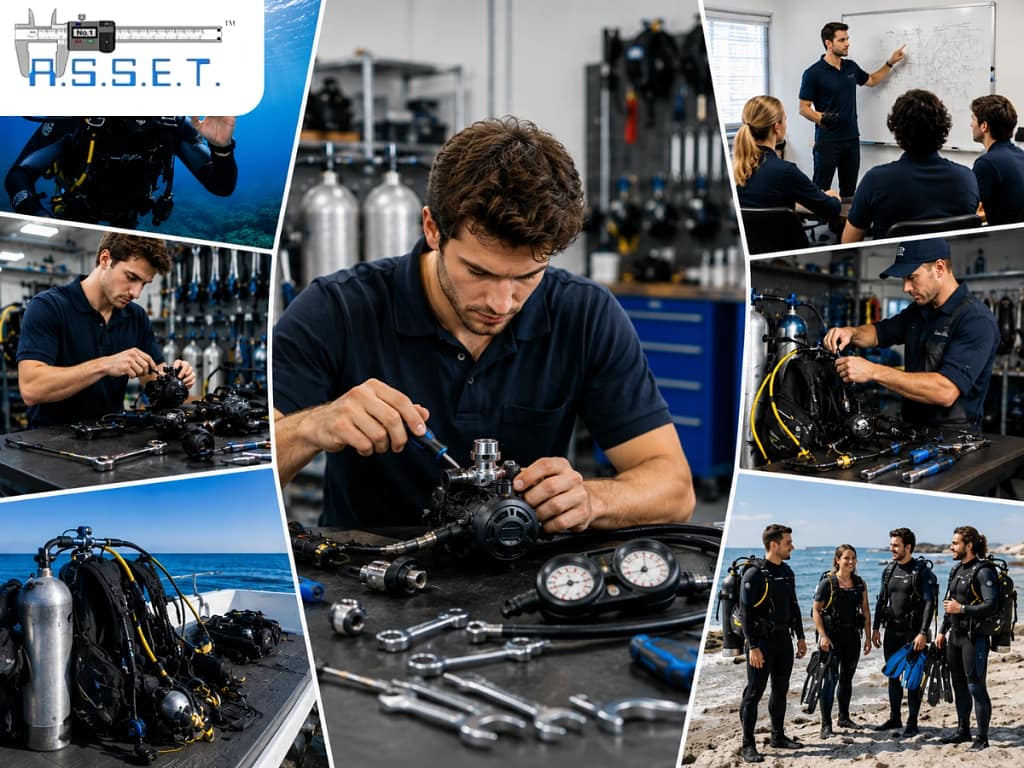
You do not need to work in a large dive centre before considering technician preparation. The training can suit people at different stages of their diving careers, including:
- Dive instructors who want stronger equipment knowledge
- Dive centre staff who handle servicing duties
- Dive centre owners who want technical skills within their team
- Existing technicians who want to update their knowledge
- People moving towards professional equipment servicing
ASSET’s CPD directory identifies the following among suitable learners
- dive technicians
- service engineers
- dive centre staff
- cylinder inspectors
- commercial diving personnel
- people entering the industry
The right course depends on your existing experience and the equipment you expect to service.
Case Study
There was a dive centre that managed a busy rental fleet. One regulator began to show inconsistent performance during routine checks.
Instead of sending the equipment away and waiting for an external service provider, the centre’s trained technician examined the unit. They identified the likely fault. They followed the correct service procedure.
The technician recorded the work and tested the equipment before returning it to the rental fleet. That small change improved workshop control and reduced delays. More importantly, it gave the centre a person with proper technical training who could deal with equipment issues systematically.
This shows the practical value of technician training. The goal is not just about earning a certificate. It involves developing skills that support everyday equipment management.
Career Value of Technical Certification
These skills can open another path within the diving industry. A qualified technician may work in
- dive centre workshop
- equipment service facility
- resort operation
- technical support role
Some experienced technicians may also build their careers around specialised servicing. At Dive Technician, our courses support people entering the scuba and commercial diving industries. We also promote ASSET certification as a way to validate technical expertise and prepare learners for professional work.
Technology also continues to develop. New equipment can bring different servicing requirements. Technicians therefore need a habit of continuing education rather than relying only on knowledge gained years ago.
Dive Technician also provides access to courses covering areas such as
- compressed-air systems
- oxygen systems
- cylinder inspection
- gas booster maintenance
Choosing the Right Certification Course
One must not just focus on the certificate title. Check the course content and practical training. You must also check the instructor’s experience and assessment process. Also consider if the programme matches the equipment you expect to service.
A useful decision process includes four questions
Does the course provide practical training?
Look for real equipment work rather than theory alone.
Does the training follow recognised standards?
A structured technical framework gives your learning a stronger foundation.
Does the course match your career goals?
A cylinder inspection course may suit one technician. A wider technician programme may suit another.
Does the provider support continued learning?
Ongoing technical development can help you keep pace with equipment and standards.
At Dive Technician, we currently have multiple ASSET-related courses. Our training is internationally recognised.
Final Thoughts
Good scuba servicing starts with knowledge. But professional competence grows through practice. It also grows through careful procedures and continued learning.
A Scuba Equipment Service Certification can give technicians a proper foundation across
- Regulators
- Cylinders
- Valves
- BCDs
- Other systems
It can also support professional development when recognised training and practical experience work together.
For anyone serious about technical work in the diving industry must choose a course based on
- practical learning
- recognised standards
- relevant equipment knowledge
Dive Technician offers ASSET-focused training for people who want to develop these skills. Check the available courses and contact Dive Technician to discuss the right training path for your goals.
FAQs
Is certification useful for a dive centre employee?
Yes. It can give staff structured technical knowledge and support safer, more consistent equipment servicing.
Does certification replace manufacturer training?
Not always. Some equipment manufacturers may require separate training or authorisation for specific servicing work. Check the manufacturer’s requirements before servicing equipment.
Can beginners study technician courses?
Some programmes suit people entering the technical side of diving. Check the entry requirements before enrolment.
Does a certificate guarantee a technician’s competence?
No. Practical ability, correct procedures, assessment and continued learning all contribute to professional competence.
Can technicians specialise in one area?
Yes. Technicians can develop specialist skills in areas such as cylinders, regulators, compressed-air systems, oxygen systems or other technical equipment.