Scuba Cylinder Visual Inspection: Can Your Dive Centre Do It?
A scuba cylinder can look fine from the outside. But it can still hide a serious problem. Defects like corrosion, thread damage, internal pitting, etc. may not show during a casual check. For a dive centre, that creates a serious responsibility. Staff handle cylinders that store gas at very high pressure. A missed defect can put divers and other people at risk.
So, can your dive centre carry out a proper Scuba Cylinder Visual Inspection? The answer depends on the following things
- staff training
- inspection equipment
- procedures
- local requirements
A quick look at the paintwork does not count as an expert inspection. A competent technician needs the knowledge to identify defects, assess rejection criteria, and record findings correctly.
What Does a Scuba Cylinder Visual Inspection Involve?
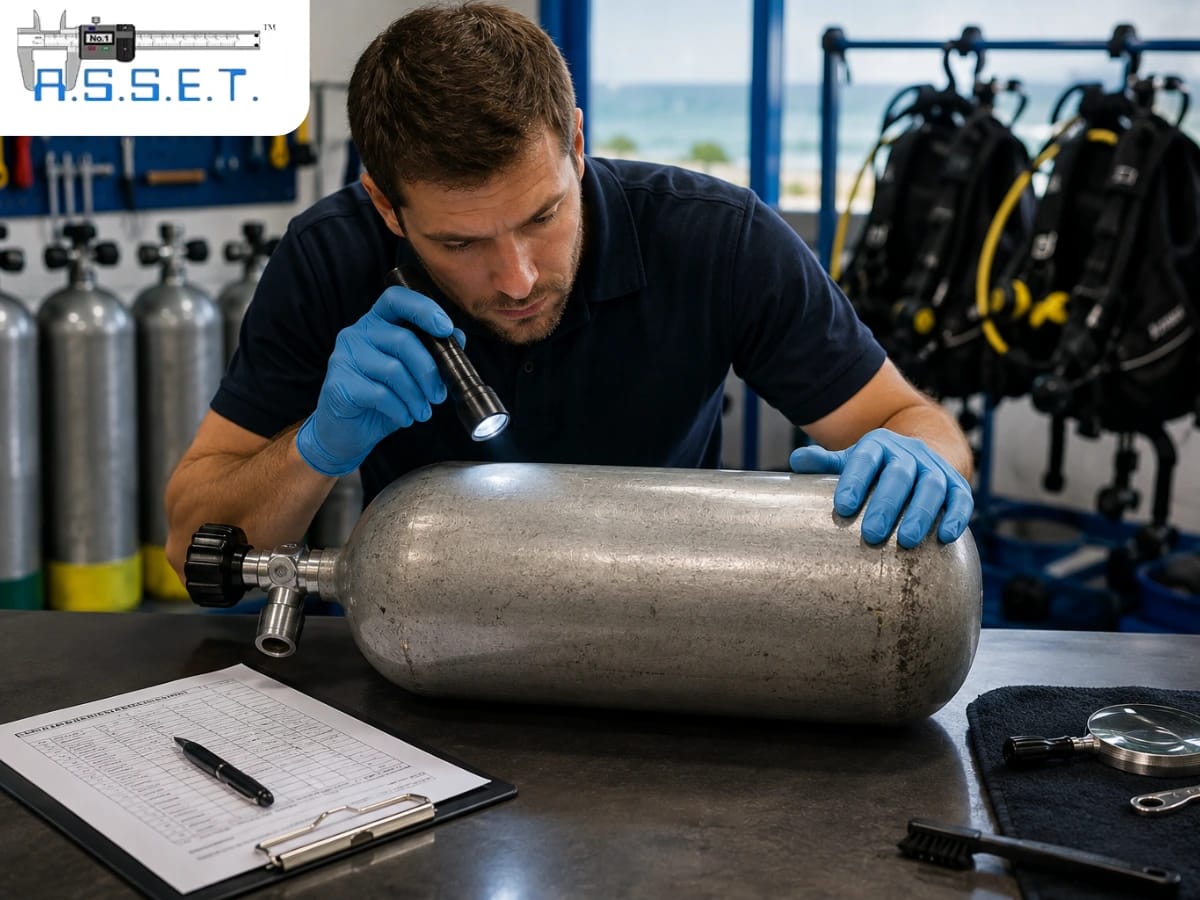
It checks the condition of the equipment before it returns to service. It covers more than dents and scratches on the outer surface of the cylinder. A trained technician examines the outside and inside of the cylinder. The technician also checks important areas around the valve and neck.
What does the inspection include?
- External corrosion
- Dents
- Bulges
- Deep scratches
- Internal corrosion
- Pitting
- Contamination
- Damage around the cylinder shoulder and base
- Neck threads and valve connection
- Cylinder markings and identification
- Signs of damage from poor storage or handling
- Previous inspection and testing records
The technician then compares the findings against the relevant inspection criteria. The technician must record the result. They must deal with any cylinder that fails the required criteria.
ASSET training covers
- internal and external visual inspection
- thread identification
- corrosion
- damage
- record keeping
- inspection procedures
The current Cylinder Visual Inspection Course uses a two-day format. This theory is followed by practical workshop training. This distinction matters because visual inspection does not simply mean looking at a cylinder. It involves technical judgement.
Why Dive Centres Need Trained Inspection Staff?
They usually handle large numbers of cylinders. Staff may fill and transport the same cylinders. They may store and issue the same cylinders many times each week. That regular use can expose cylinders to
- Knocks
- Moisture
- Salt water
- Poor storage conditions
Over time, these factors can affect the cylinder surface and internal condition. A trained technician knows the signs that deserve closer attention. They also understand that different defects carry different levels of risk.
A surface mark may look minor. A trained person must still assess its depth and position. They must also check its effect on the cylinder. Internal corrosion can prove even harder to identify without proper inspection methods. Professional training gives staff a structured process rather than relying on experience alone.
Our training is practical and focused on real-world competence. Our wider programme covers not only cylinder and valve servicing. It also includes diving equipment servicing.
ASSET Dive Industry Technician Courses
A Simple Inspection Comparison
| Basic visual check | Professional cylinder inspection |
| Looks mainly at the outside | Checks internal and external condition |
| Relies on general observation | Uses defined inspection procedures |
| May miss internal corrosion | Uses suitable inspection methods |
| May not assess rejection criteria | Applies recognised criteria |
| Limited record keeping | Maintains traceable records |
| Staff may lack technical training. | Trained personnel perform the inspection |
This difference shows why a dive centre should treat cylinder checking as a technical responsibility rather than a routine visual task.
What Defects Can an Inspection Find?
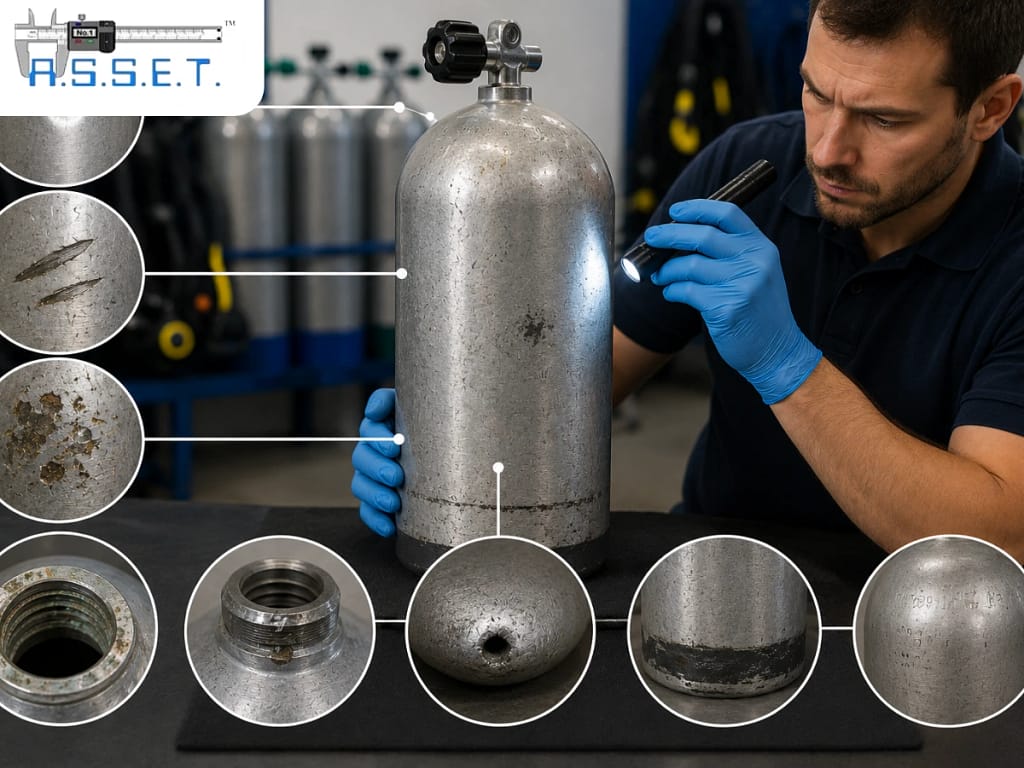
Cylinder defects can develop in different ways. Some relate to the cylinder material. Others come from handling and storage. Some may be due to moisture and incorrect servicing.
External corrosion
Saltwater and moisture can affect the outer surface of a cylinder. Corrosion can weaken the material if it becomes severe. A technician checks the affected area. They assess its condition against the relevant criteria.
Internal corrosion and pitting
Damage from the inside can pose a greater challenge. This is because staff cannot see it during a normal external check. A technician needs suitable inspection lighting and methods to examine the inside. Deep pitting can affect the cylinder wall. It needs careful assessment.
Neck and thread damage
These areas need careful attention. This is because the valve connects directly to this area. A trained technician checks the thread condition and compatibility before the cylinder returns to service. ASSET’s cylinder testing guidance specifically includes neck thread inspection and valve compatibility.
Dents and Bulges
A cylinder can suffer damage during transport and filling. It may also happen due to storage and everyday dive-centre operations. A technician needs to assess the location and severity of such damage rather than simply deciding that a cylinder looks usable.
Contamination
The inside of a cylinder can also contain moisture. There can also be other contamination. The technician needs to identify unsuitable conditions and take the correct action.
Visual Inspection and Hydrostatic Testing Are Not the Same
Dive centres sometimes treat these two things as one process. They serve different purposes. A Scuba Cylinder Visual Inspection examines the cylinder’s physical condition. Hydrostatic testing assesses the cylinder under controlled pressure. It includes specific testing procedures.
One process does not automatically replace the other.
ASSET’s technical guidance describes periodic inspection and hydraulic testing as separate parts of cylinder safety work. The current training also covers proof and hydrostatic testing principles alongside inspection procedures. Inspection schedules also depend on the following things
- cylinder type
- applicable standards
- local requirements
Dive centres should therefore follow the rules that apply to their cylinders and operating location. The current ISO 18119 update training from ASSET covers
- steel and aluminium cylinders
- visual inspection requirements
- rejection criteria
- periodic testing
- documentation
- technician responsibility
What Does a Dive Centre Need Before It Starts?
This place requires more than a trained employee with a torch. The centre should have the following things
- suitable inspection equipment
- current procedures
- relevant technical information
- reliable record system
Staff should also understand the limits of their competence. A sensible approach includes five areas
- Competent staff who understand cylinder inspection procedures.
- Suitable inspection equipment for internal and external examination.
- Current standards and guidance relevant to the cylinders being inspected.
- Clear records that show inspection findings and decisions.
- A defined process for failed cylinders so staff do not return questionable equipment to service.
The final point deserves special attention. A technician should never feel pressure to pass a cylinder because the dive centre needs more equipment for customers.
Safety decisions need to come before convenience.
Dive Centre Case Study
There is a small dive centre in Cyprus that had sent some of their staff for training with us. The reason they took this step was that their staff were preparing equipment for a busy summer season.
The manager noticed corrosion on several older aluminium cylinders. The cylinders still looked usable. But the team did not have enough technical knowledge to judge the internal condition. They were not that well trained, so they could not decide which cylinders needed further testing. Instead of relying on a quick external check, the centre sent staff for structured cylinder inspection training. The team learned to examine internal and external surfaces. They also learned to identify corrosion and damage. They learnt to check threads and keep proper inspection records.
Now the centre can make better decisions about which cylinders need further action before returning equipment to divers.
Scuba Cylinder Visual Inspection Training: What Should Staff Learn?
It should combine technical knowledge with practical experience. ASSET’s Cylinder Visual Inspection Course – Part 1 runs over two days. The first day covers theory. The second day provides practical workshop training. The course has no prerequisites. It is for people who are new to cylinder visual inspection.
Key learning areas include
- Inspection procedures and basic testing principles
- Internal and external cylinder inspection
- Corrosion and damage identification
- Thread identification and gauging
- Valve checks and maintenance awareness
- Standards and codes of practice
- Inspection records and traceability
This practical focus can help technicians understand the difference between reading an inspection rule and applying it to a real cylinder. ASSET also lists an updated ISO 18119 training course for technicians who already hold previous cylinder inspection or testing training. The course addresses changes in current standards and procedures.
That matters because technical standards can change. A technician who trained years ago should check if their knowledge still matches current requirements.
When Should a Dive Centre Invest in Training?
This can make sense whenever staff take responsibility for cylinder inspection. It becomes especially relevant when a centre
- Maintains its own cylinder fleet
- Handles cylinders for customers
- Wants stronger technical controls
- Needs staff with recognised technical training
- Plans to expand its equipment servicing work
- Wants better inspection records and procedures
A centre should also review staff competence when responsibilities change. Someone who mainly fills cylinders may not have the expertise needed for detailed inspection work. The person performing the inspection needs suitable training for the task.
Choosing the Right Cylinder Inspection Course
Not every course gives the same level of practical learning. Dive centres should not just look at the course title before enrolling staff. Check whether the programme covers the following
- practical inspection work
- current standards
- defect recognition
- rejection criteria
- documentation
It also helps to check if the training provides a recognised certificate and if it fits the technician’s existing experience. ASSET currently has its courses CPD-accredited through the CPD Standards Office in the UK. This recognition supports structured professional development and records of technical learning.
The right course should also match the work the technician will perform after training. Basic visual inspection training and advanced cylinder testing require different levels of knowledge.
Common Mistakes Dive Centres Should Avoid
Some blunders can undermine an otherwise good cylinder safety process.
- Relying on appearance: A clean cylinder does not automatically mean a safe cylinder.
- Ignoring internal condition: Internal corrosion can remain hidden without a proper internal inspection.
- Treating every defect in the same way: Technicians need defined criteria for deciding if a cylinder passes/fails/needs further assessment.
- Using old technical information: Staff should work from current requirements and procedures.
- Poor record keeping: Inspection findings should remain traceable and clear.
- Working outside competence: Staff should not perform technical tasks without suitable training and equipment.
These mistakes usually start with a simple assumption: that cylinder inspection requires little technical knowledge. An expert inspection process takes a very different approach.
Final Thoughts
A cylinder carries a diver’s breathing gas at high pressure. That responsibility deserves more than a quick look before filling. Three things matter most
- trained personnel
- proper inspection procedures
- accurate records
A dive centre that invests in these areas can build a stronger safety process. It gives technicians greater confidence in their decisions.
Scuba Cylinder Visual Inspection training can give dive-centre staff a practical foundation for inspecting cylinders and recognising defects. ASSET offers a two-day Cylinder Visual Inspection Course with theory and practical workshop training. It is supported by its wider dive technician training programme.
If your dive centre wants to strengthen its cylinder inspection skills, explore the ASSET training options. Choose a course that matches your team’s responsibilities and experience. For more details, speak to the expert team at Dive Technician.
FAQs
Is visual inspection required for every scuba cylinder?
Inspection requirements depend on the cylinder type, applicable standards, and local regulations. Dive centres should follow the requirements that apply to their equipment.
What happens when a cylinder fails inspection?
The technician should identify and record the defect. They must follow the applicable rejection or further-testing procedure. The cylinder should not return to service until the required action is complete.
Can a dive instructor perform cylinder inspections?
An instructor should only inspect cylinders if they hold suitable training, competence and authorisation for that technical task. Diving experience alone does not replace inspection training.
Does visual inspection replace hydrostatic testing?
No. Visual inspection and hydrostatic testing assess different aspects of cylinder condition. Both may form part of a cylinder’s required safety programme.
Can old cylinder inspection training still be used?
Previous training may not cover newer standards and procedures. Technicians should check current requirements and consider updated training where needed.