Composite Cylinder Inspection and Testing Course: Why Cyprus Technicians Need PT3 Certification
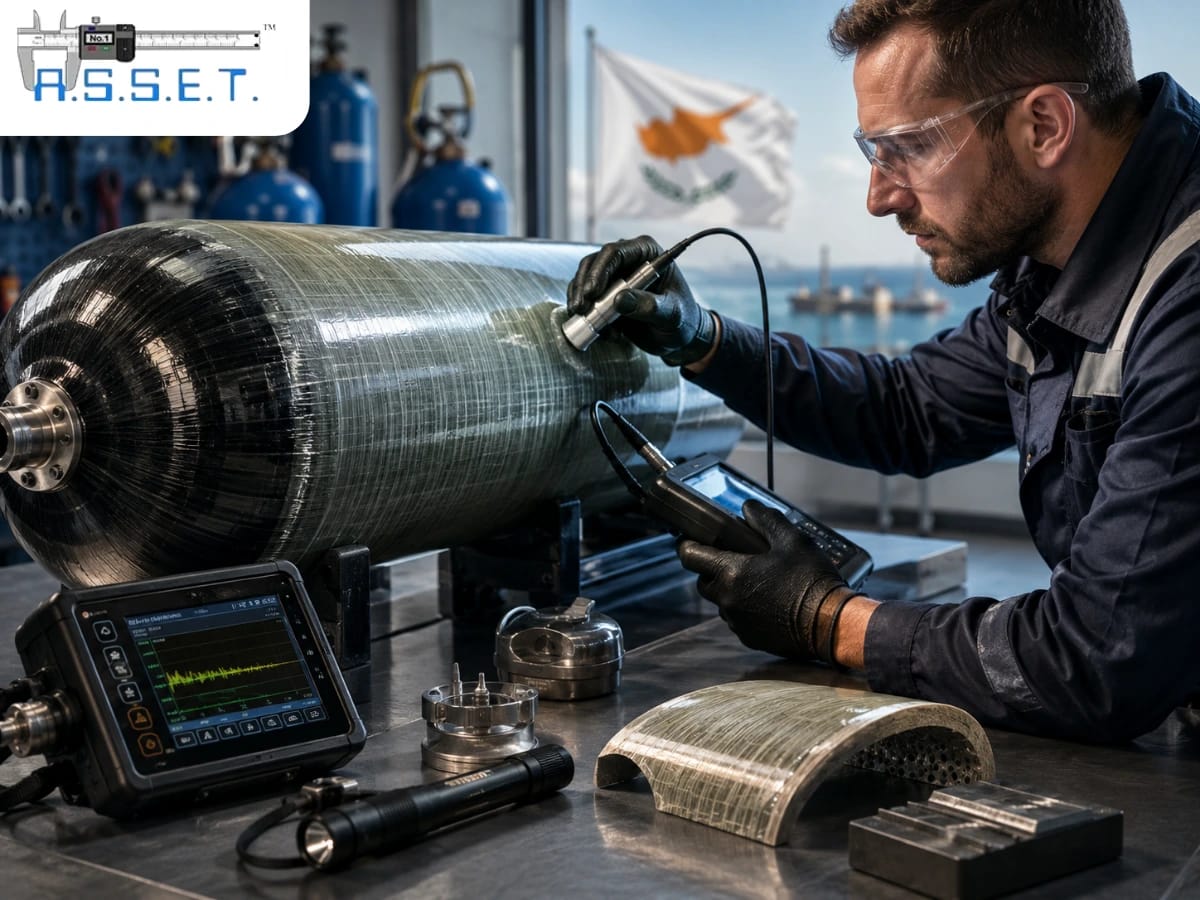
Composite cylinders show up all over the diving and safety equipment world these days. Firefighters wear them. Dive centres fill them for technical divers chasing lighter kit. Paintball ranges, emergency escape sets, and portable oxygen units run on the same carbon-wrapped construction.
Here’s the catch. Most cylinder technicians are trained on steel and aluminium. Composite cylinders don’t behave the same way, and treating them like metal tanks during an inspection is where mistakes creep in.
That’s the gap the ASSET Composite Cylinder Inspection Training (PT3) was built to close. It’s become one of the more requested cylinder inspection and testing courses among technicians working across Cyprus.
What Is a Composite Cylinder Inspection and Testing Course?
A composite cylinder inspection and testing course teaches qualified technicians how to visually assess, pressure test, and grade defects on carbon fibre-wrapped cylinders. This work follows recognised standards such as EN ISO 11623, the international standard covering periodic inspection and testing of composite gas cylinders and tubes.
Unlike a general cylinder course, this training zeroes in on the failure points unique to composite construction. Think delamination, fibre damage hiding under the resin coating, and degradation from UV exposure or saltwater contact.
Composite cylinders can look completely fine on the outside while carrying real structural damage underneath. That’s the entire reason this dedicated course exists. A technician trained only on metal cylinders can end up passing a tank that should have been condemned, simply because nobody ever taught them what to look for beneath the surface.
Why Standard Cylinder Visual Inspection Training Is Not Enough for Composite Tanks
Steel and aluminium cylinders tend to fail in predictable ways. Corrosion, pitting, neck cracks, dents. Usually visible to a trained eye.
Composite cylinders fail differently. A knock against a boat ladder. A season sitting in direct Mediterranean sun. A slow soak in salty bilge water. Any of these can weaken the fibre wrap without leaving a mark you’d notice on the surface. Organisations like DAN have long flagged how much energy a pressurised cylinder holds, and why inspection has to catch damage before a fill, not after.
This is exactly why ASSET requires technicians to already hold visual and hydrostatic inspection qualifications before stepping into the composite-specific programme. It’s a specialisation, not a starting point.
Who Should Take the Composite Cylinder Inspection Course in Cyprus
Cyprus has a dense concentration of dive centres, technical diving operations, and fill stations. Ayia Napa, Protaras, Limassol, and Paphos all sit along that coastline.
Composite cylinders keep showing up more often in rental fleets, technical diving setups, and emergency response kits across the island. This makes the course relevant to:
- Dive centre managers running mixed steel, aluminium, and composite rental fleets
- Fill station operators who need to sign off cylinders before every fill
- Technicians servicing SCBA units for local fire and rescue teams
- Anyone maintaining emergency escape breathing systems (ELSA) or portable oxygen cylinders
- Independent equipment servicing businesses expanding into composite work
Simply put, if your inspection sticker covers steel and aluminium but a customer hands you a carbon-wrapped cylinder, you are not legally or practically qualified to sign it off without this certification.
Composite Cylinder Inspection Course Content
Composite Cylinder Inspection Theory Component
The classroom and online theory portion covers:
- Differences between composite, steel, and aluminium cylinder construction
- Defect grading across Levels 1, 2, and 3
- Service life limits and inspection intervals for wrapped cylinders
- Environmental damage caused by UV, heat, and salt exposure
- Hydrostatic testing considerations specific to composite construction
Composite Cylinder Inspection Practical Workshop
The hands-on session is where the course really earns its reputation. Candidates work directly with real composite cylinders, including deliberately borderline pass and fail examples, to practise:
- Full external inspection of composite cylinders
- Identifying and grading defect levels under time pressure
- Making the call on genuinely borderline cases
- Deciding when a cylinder must be pulled from service permanently
This practical assessment matters because inspection decisions carry real liability. A technician needs to walk out able to defend their call, not just recognise a textbook example.
Prerequisites for the PT3 Composite Cylinder Course
To enrol, candidates must already hold:
- ASSET Cylinder Visual Inspection (Part 1)
- ASSET Hydrostatic Testing (Part 2)
There’s a reason for that sequencing. Composite inspection builds on the fundamentals taught in the first two parts. Candidates walk in already comfortable with basic procedure, paperwork, and pressure testing, so the course can focus purely on the composite-specific layer.
Case Study: Composite Cylinder Inspection at a Protaras Dive Centre
A small dive centre in Protaras had a handful of composite cylinders in its rental fleet, added for technical divers passing through on liveaboard trips. The technician’s certification only covered steel and aluminium.
A customer flagged a small mark near a composite cylinder’s neck. Nothing obvious on the surface, so the technician was ready to pass it, but sent it for a proper composite inspection first.
The course changed the read entirely. Surface marks on a composite wrap can hide fibre damage a steel-trained eye would miss. Re-inspected with the correct grading criteria, the cylinder showed early-stage damage in a rejection category. It never went back into service.
A small call, but exactly the kind this training exists to support.
Why Composite Cylinder Inspection Training Matters for Safety and Liability
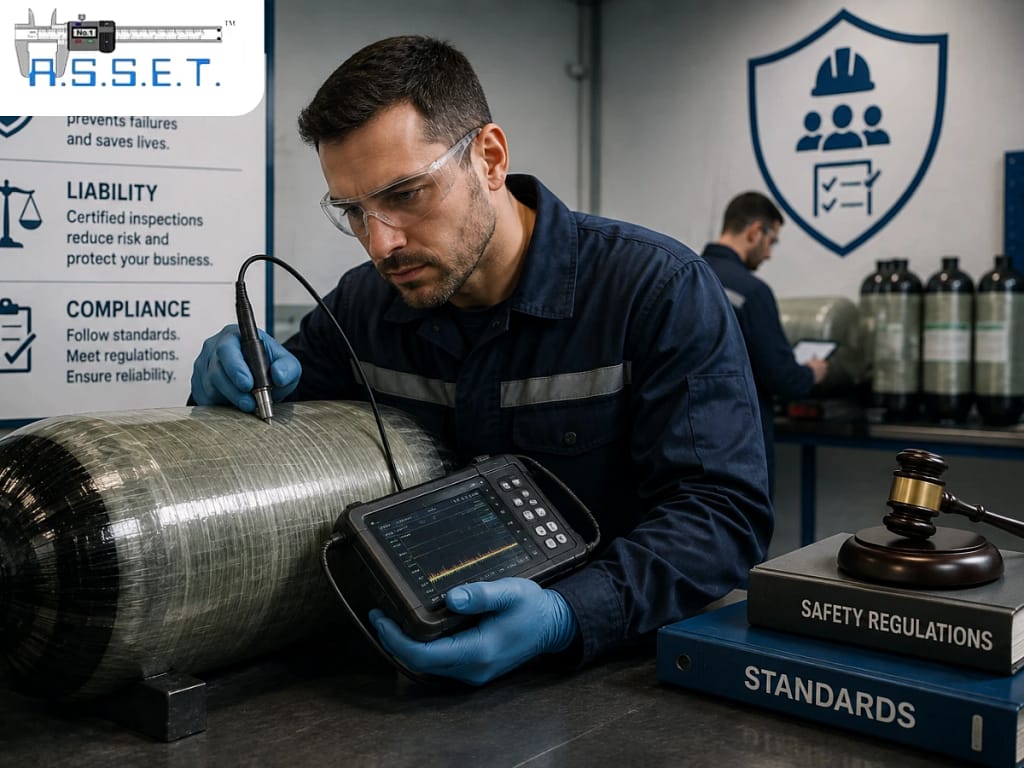
Composite cylinders are popular because they’re light and strong. That same construction also introduces risks steel and aluminium simply don’t have.
Getting an inspection wrong can lead to:
- Missed structural damage that only becomes obvious under pressure
- Unsafe cylinders remaining in active rental or emergency service
- Direct liability for the technician or the dive centre if something fails later
A proper composite cylinder inspection and testing course closes that gap. It gives technicians a repeatable, defensible process instead of a judgement call based on experience with the wrong material.
What You Will Gain From the Composite Cylinder Inspection Course
- A clear, working understanding of how composite cylinders actually behave
- Genuine hands-on inspection experience, not just slides
- Confidence identifying and grading defects correctly
- Better, faster decision-making during real inspections
- Certification aligned with recognised industry standards across Cyprus, the UK, and Europe
Composite Cylinder Testing Course Format and Flexible Learning
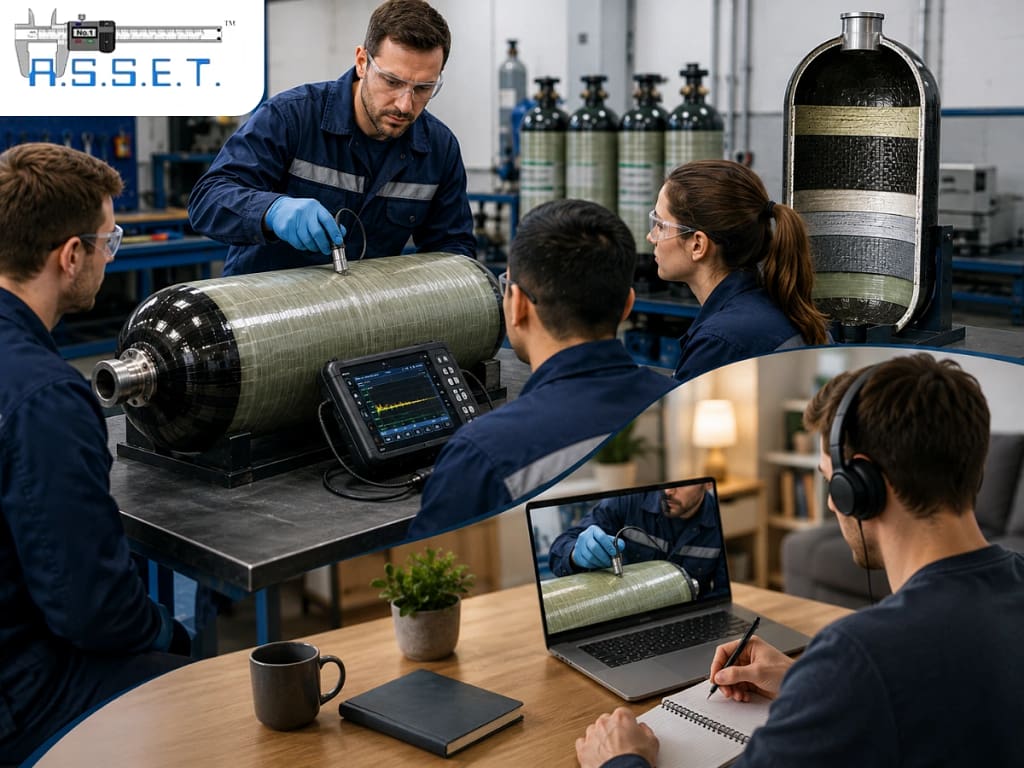
The course runs as a one-day, workshop-based programme. Candidates who prefer to work through the academic component online first can do so, then attend the practical workshop within 12 months of passing the theory assessment.
Classroom-based theory review is also available for technicians who prefer that format. Students should bring an iPad or laptop for course materials on the day.
Frequently Asked Questions
What is the difference between PT1, PT2, and PT3 in cylinder inspection training?
PT1 covers general visual inspection of steel and aluminium cylinders. PT2 covers hydrostatic testing procedures. PT3, the composite cylinder inspection and testing course, builds on both and adds the specific knowledge needed to inspect carbon fibre wrapped cylinders safely.
Can I take the composite cylinder course without prior certification?
No. This course is designed for qualified inspectors only. You must already hold ASSET Cylinder Visual Inspection (Part 1) and ASSET Hydrostatic Testing (Part 2) before enrolling in the composite-specific programme.
How long does the composite cylinder inspection course take?
The course is delivered as a one-day, in-person workshop combining theory and hands-on practical assessment. Candidates who complete the theory portion online in advance can still attend the practical workshop within a 12-month window.
Why do composite cylinders need a different inspection process to steel or aluminium?
Composite cylinders are built from a carbon fibre wrap over a liner, rather than solid metal. Damage such as delamination or fibre breakdown can develop beneath the surface while the cylinder still looks fine externally. Standard steel and aluminium inspection techniques are not designed to catch this.
Is this course recognised outside Cyprus?
Yes. ASSET certification is recognised across Cyprus, the UK, and most of Europe, which is useful for technicians working with international dive operators or fleets that move between locations.
What happens if a composite cylinder fails inspection?
Depending on the defect grade identified, the cylinder may require repair to the overwrap, retesting, or permanent removal from service. The course specifically trains technicians to grade defects correctly so this decision is consistent and defensible.
Book Your Composite Cylinder Inspection and Testing Course in Cyprus
If you are already inspecting cylinders professionally and composite tanks are starting to appear in your fleet or your customers’ kit bags, this course is the logical next step. It closes a real gap in training that many technicians across Cyprus are only discovering once a composite cylinder lands on their bench.
Enquire about upcoming course dates or contact the ASSET team at Dive Technician to book your place.