Dive Industry Technician Course: Full Module Guide for 2026
A single equipment failure can risk a diver’s life. That reality pushes many professionals to build strong technical skills. The Dive Industry Technician Course gives practical training. This prepares individuals for real workshop challenges. Many divers and technicians feel unsure about equipment servicing at the start. This course removes that gap. It builds confidence step by step.
This blog explains every module in simple terms. It also shows
- real benefits
- practical learning
- career value
By the end, readers will understand what they gain and why this training matters.
Why This Training Matters in 2026
The diving industry grows every year. More dive centres and training facilities need expert technicians. A report from the Health and Safety Executive highlights that proper equipment servicing reduces incidents during diving operations.
Many dive centres struggle to find trained professionals. They often depend on limited staff for repairs. This gap increases demand for certified technicians.
A trained technician can do the following
- Improve safety standards
- Reduce equipment failure
- Support daily operations in dive centres
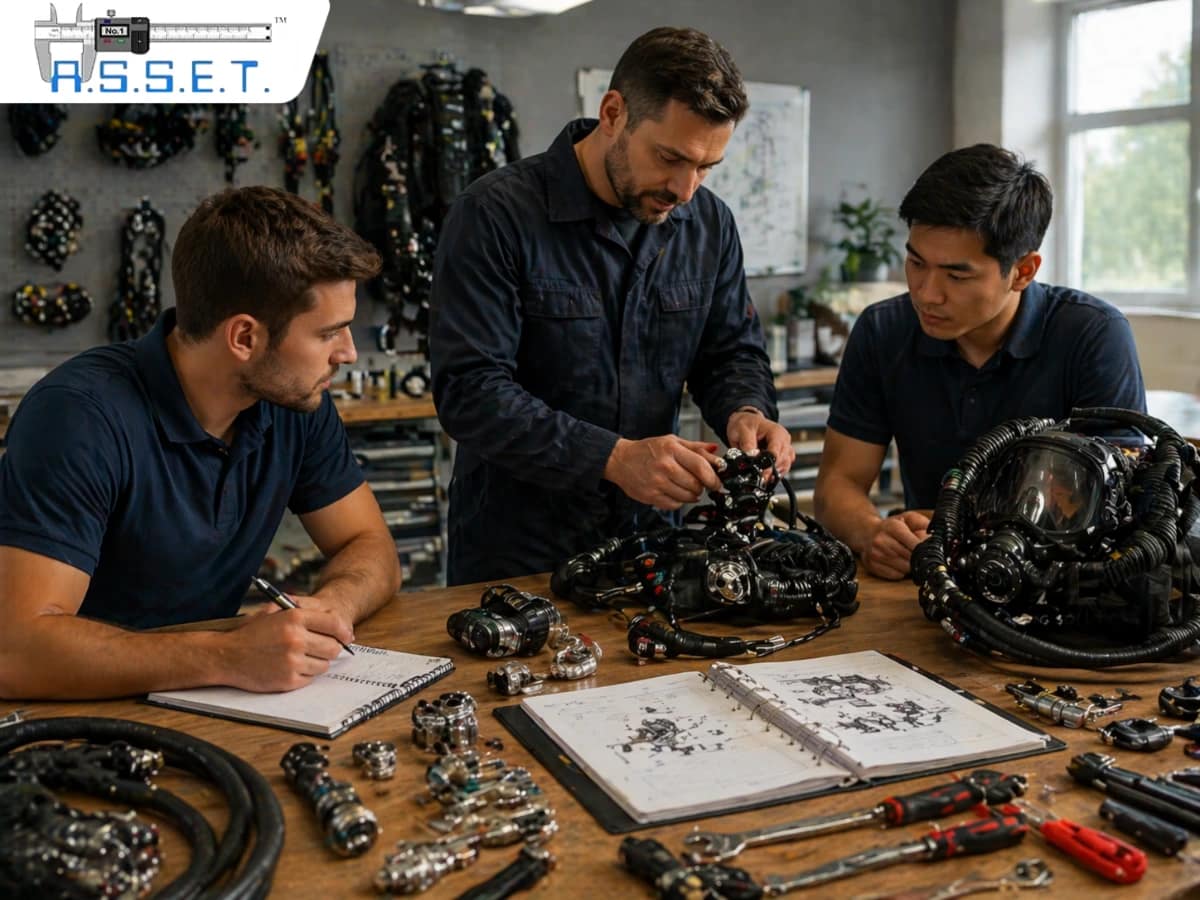
This course focuses on real expertise and not just theory. It builds confidence through practical practice in a workshop.
Dive Industry Technician Course Modules Explained
The course runs for 10 days. It combines academic sessions with workshop practice. Each module builds knowledge step by step.
Day 1: Workshop Safety and Introduction
It sets the foundation. Students learn safety rules and workshop discipline. They also study personal protective equipment and tool handling. Trainers explain emergency procedures. They talk about first aid basics. These things protect the technician and others in the workshop.
Day 2: Diving Physics and Equipment Basics
This module explains pressure and buoyancy. It also talks about gas laws. These concepts help technicians understand equipment behaviour underwater. Students also study different types of diving equipment. They learn the purpose and working principles of each component.
Day 3: Regulator Service and Repair
This controls airflow for divers. This module focuses on their structure and function. Students practice
- Disassembly
- Assembly
- Fault detection
- Upkeep procedures
Practical work improves confidence. It also improves accuracy.
Day 4: Equipment Design and Construction
This module explains the design of diving equipment. Students study materials and performance. They compare different designs. They understand efficiency. This knowledge helps them identify quality equipment in real scenarios.
Day 5: Compressors and Air Quality
Clean air is essential for safe diving. This module covers compressor operation and air quality testing. Students learn the following things
- Types of compressors
- Maintenance routines
- Air testing methods
They also practice operating compressors in a controlled setup.
Day 6: Workshop Setup and Organisation
A professional workshop needs proper planning. This module focuses on layout and tools. It also focuses on workflow. Students learn record-keeping and time management. These things improve efficiency in daily operations.
Day 7: Standards and Working Practices
This module introduces industry standards and certifications. Students study best practices for servicing and repair. Real case studies help them understand real-world challenges. Trainers help them through practical problem-solving tasks.
Day 8: Warranties and Customer Care
Technicians usually interact with customers. This module focuses on communication and service quality. Students learn
- Warranty handling
- Customer interaction
- Complaint resolution
These things improve professional behaviour in the workplace.
Day 9: Regulations and Compliance
This module covers legal requirements in the diving industry. Students study safety rules and inspection procedures. They understand compliance standards that apply to equipment and workshops.
Day 10: Cylinder Testing
The final module focuses on cylinder inspection and testing. Students learn different cylinder types and their uses. They perform testing procedures. They analyse results. This module builds strong technical confidence.
What You Gain from the Training
This course builds technical and practical skills. Students leave with strong knowledge and real experience. Main skills include
- Equipment servicing and repair
- Compressor operation
- Air quality testing
- Workshop management
- Customer communication
Many graduates use these things in
- dive centres
- offshore projects
- repair facilities
Actual Experience For Your Reference
One student shared that practical training improved confidence more than years of self-learning. Real equipment practice made a clear difference. Speak to our team to learn about more such experiences of our students.
Course Structure and Learning Approach
It follows a balanced structure:
| Component | Duration |
| Academic Learning | 4 days |
| Workshop Training | 6 days |
This structure ensures a strong understanding and practical experience.
Students also receive a detailed handbook. It has diagrams and examples that support learning.
You can also approach us for courses such as ASSET Scuba Service Technician certification. We have many different courses. You can choose one based on your liking.
Career Opportunities After Completion
This training opens many vocational paths. The diving industry needs expert technicians in different roles. Common career options
- Dive centre technician
- Equipment service specialist
- Offshore support technician
- Workshop manager
A survey in 2025 showed that trained technicians find work faster than general dive professionals. Employers prefer candidates with technical certification.
Real Value: What Makes This Course Different
Many courses focus only on theory. This training focuses on practical learning. Students work in a real workshop setting. They handle tools and equipment daily. This approach builds confidence quickly.
The course also includes
- Certification from recognised bodies
- Hands-on cylinder testing
- Real equipment servicing practice
These things make the training more effective than basic classroom courses.
Expert Insight and Industry Trust
The training is as per the standards of leading organisations in the diving industry. It also follows safety recommendations from global authorities. There are reports that highlight the need for proper technician training to improve safety and equipment reliability.
Experienced instructors with years of offshore and repair experience lead the sessions. Their guidance helps students understand real-world challenges.
Final Thoughts: Is This Training Worth It?
This course builds
- strong technical skills
- real workshop experience
- industry knowledge
It prepares individuals for real challenges in diving operations.
The Dive Industry Technician Course gives three clear benefits
- Practical skills that improve confidence
- Certification that increases job opportunities
- Knowledge that supports safe diving operations
For anyone serious about a technical career in diving, this training gives strong value. Take a look at the course options at dive-technician.com. Take the next step towards a professional future.
FAQs
Is prior diving experience required for this training?
Basic knowledge of diving helps. But beginners with an interest in technical work can also join.
Does the course include certification from recognised bodies?
Yes. Successful participants receive certification linked to major industry organisations.
Can this training support offshore job opportunities?
Yes. Many offshore roles prefer candidates with technical repair and maintenance skills.
What type of equipment do students use during training?
Students use real diving equipment, including regulators and cylinders.
Is the training suitable for dive instructors?
Yes. They can gain technical knowledge. This improves their professional profile.