Scuba Technician Training Cyprus: Everything You Need to Start Your Career
Every year, many diving professionals depend on properly serviced equipment for safe dives. A single fault can put lives at risk. That is why trained dive technicians are needed across the diving industry. If you like technical work and want a good career, this blog will help you understand the training and opportunities available. You will also learn what to expect from these courses.
Scuba Technician Training Cyprus: The First Step
The diving industry needs experts who understand
- Equipment
- safety standards
- servicing procedures
The following entities depend on these experts
- Dive centres
- Liveaboards
- Equipment manufacturers
- Commercial diving companies
Scuba Technician Training Cyprus gives students practical knowledge and hands-on experience with equipment. The focus is not only on theory. Quality training combines classroom learning with workshop sessions.
ASSET, the Association of SCUBA Service Engineers and Technicians, has spent many years raising standards. Its internationally recognised courses prepare students for real work settings and follow recognised industry practices.
Many ASSET programmes also carry CPD Standards Office accreditation. This confirms that the training meets recognised professional development standards. It supports long-term career growth.
Why Cyprus Is The Best Place to Study
It has earned a strong reputation in the diving community. The island welcomes divers from around the world throughout most of the year. This active diving setting gives students exposure to equipment and daily workshop activities.
Training here gives several advantages.
- Experienced instructors with years of industry knowledge
- Modern workshop facilities
- International student community
- Practical learning based on real servicing tasks
- Training that follows recognised technical standards
Things You Will Learn During Training
During the course, students usually learn
| Training Area | Expertise Gained |
| Regulator servicing | Inspection, maintenance and testing |
| Cylinder inspection | Visual checks and servicing procedures |
| Valve maintenance | Safe inspection and repair techniques |
| Gas systems | Oxygen handling and gas blending principles |
| Equipment diagnostics | Identifying faults and performance issues |
| Safety standards | International servicing procedures |
Certification That Employers Respect
A recognised qualification gives employers confidence in your abilities.
An ASSET Dive Industry Technician qualification shows that you understand servicing procedures and recognised safety standards. Employers usually look for candidates with proper technical training. This is because equipment servicing needs accuracy and responsibility.
Many students also continue with specialist courses after completing their main technician programme. These advanced subjects may include
- cylinder inspection
- oxygen technician training
- gas blending
- compressed air systems
- composite cylinder inspection
Completing a Scuba Equipment Service Certification also strengthens your work profile. It shows your commitment to industry standards.
Who Should Join This Training?
Students often come from different backgrounds, like
- Dive instructors.
- Dive centre staff.
- Equipment sales professionals.
- Commercial diving support teams.
- Career changers with strong mechanical interest.
A willingness to learn and the right attitude matter more than previous technical experience.
Expert instructors help students through each stage of the learning process. They explain every servicing procedure in simple steps.
What Makes ASSET Training Different?
Many technical courses focus heavily on classroom presentations.
ASSET places emphasis on practical competence.
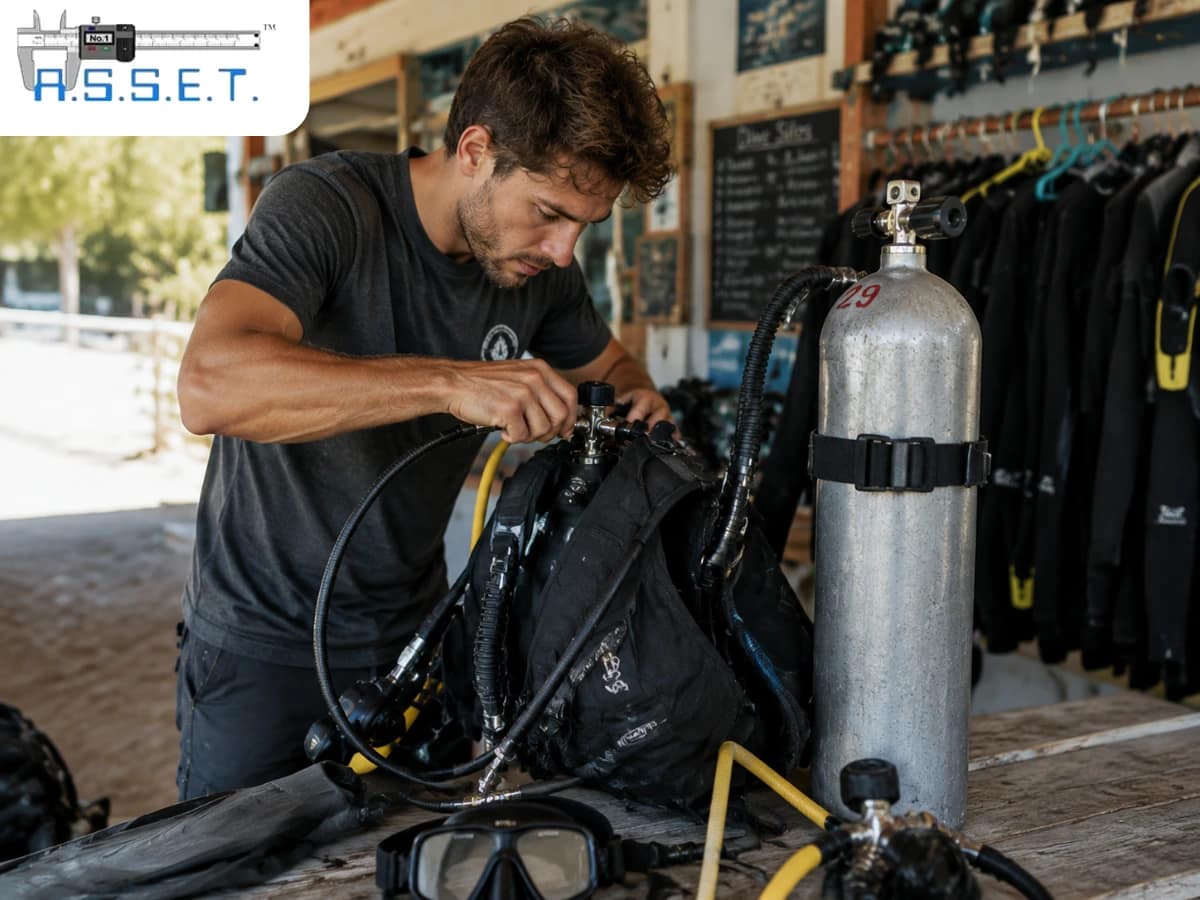
Students spend time working directly with dive equipment under expert supervision. This practical approach gives confidence.
The organisation also updates course material to show current industry practices. This gives students correct knowledge instead of outdated information.
Another advantage comes from the international recognition of ASSET certification. Dive centres and employers in many countries recognise the value of proper technician training.
Career Opportunities After Training
The diving industry provides many paths for qualified technicians.
After completing Scuba Technician Training Cyprus, graduates may find opportunities with
- Dive centres
- Equipment service workshops
- Commercial diving companies
- Equipment manufacturers
- Liveaboard operators
- Military and government diving units
- Diving equipment distributors
Many technicians also support training centres by inspecting and servicing student equipment before each diving season.
Some professionals later become trainers after getting industry experience and meeting the required qualifications.
What Employers Look For
They want people who work carefully and follow safety procedures every time.
The qualities they look for
- Attention to detail
- Good problem-solving ability
- Professional communication
- Safe working practices
- Confidence with technical manuals
- A commitment to continuous learning
Reliable technicians help dive centres reduce equipment failures. They improve customer confidence.
Why Practical Training Makes the Difference
Reading manuals gives knowledge. But practical experience gives confidence. Working with real equipment helps students understand every servicing step. They learn to
- identify wear
- inspect components
- replace parts correctly
- test equipment before it returns to service
Experienced instructors also share lessons from years of working in the industry. These practical things prepare students for situations that books cannot explain. Many graduates say the workshop sessions gave them the confidence to begin servicing equipment.
Industry Demand
The industry continues to grow through
- recreational diving
- technical diving
- commercial operations
- marine tourism
This growth increases the need for trained technicians who can maintain equipment safely. Certifications also continue to get value as dive centres place more focus on
- Safety
- Documented servicing
- Recognised technical standards
ASSET’s CPD-accredited training supports this demand by combining learning with practical competence.
Final Thoughts
A successful technician combines
- technical knowledge
- practical skills
- commitment to safety
The following things support career success
- Choosing recognised training
- Learning from experienced instructors
- Getting hands-on workshop experience
Scuba Technician Training Cyprus gives the best starting point for anyone who wants to enter the dive industry. It is also a good option for someone who wants to strengthen existing technical expertise. With internationally recognised ASSET certification and practical learning, you can prepare for opportunities across the diving sector.
If you are interested in this field, then check the ASSET Dive Industry Technician courses. For complete details, contact Dive Technician.
FAQs
Does the course include practical workshop sessions?
Yes. Students spend time servicing and inspecting real dive equipment under instructor supervision.
Can international students join this training?
Yes. Students from many countries attend ASSET courses. They earn internationally recognised certification.
What equipment do students work with during training?
Students work with regulators and cylinders. They work with valves and breathing systems. They also work with other essential diving equipment.
Does the certification support career growth?
Yes. A recognised qualification strengthens your professional profile. It improves employment opportunities within the diving industry.
Is technical support available after completing the course?
Yes. We support graduates through additional training opportunities and professional development programmes.