Professional Scuba Technician Certification: Why Dive Centres Prefer Certified Experts in 2026
A regulator failure underwater can become serious within seconds. Poor cylinder handling, incorrect servicing, or badly managed gas systems can put divers and dive centres at real risk.
This is why many dive centres now look for technicians with proper Professional Scuba Technician Certification, not just informal workshop experience.
The modern diving industry needs technicians who understand:
- Scuba regulator servicing
- Cylinder inspection and testing
- Oxygen cleaning and contamination control
- Gas blending and mixed-gas safety
- Compressor and breathing-air systems
- Service documentation and traceability
- ISO, European and British standards
ASSET training is designed to help technicians work to a recognised professional standard, with the knowledge and practical skills needed to support safe dive operations.
The Dive Industry Has Changed
Years ago, many dive centres mainly supported standard recreational diving. Today, the industry is much more technical.
Modern dive operations may now support:
- Nitrox diving
- Trimix and Heliox diving
- Extended-range dives
- Decompression diving
- Technical training programmes
- High-volume rental equipment
- Compressor and air bank systems
This means equipment servicing can no longer be treated casually. Dive centres need competent technicians who understand the equipment, the standards, and the responsibility that comes with maintaining life-support systems.
Why Certification Matters
A certification should not simply mean that someone attended a course. A proper professional certification should show that the technician has received structured training, practical workshop experience, and assessment against clear criteria.
ASSET focuses on technician competence in areas such as:
- Inspection and servicing procedures
- Fault recognition
- Correct use of tools and test equipment
- Cleaning and contamination control
- Cylinder and valve safety
- Breathing-air awareness
- Documentation and service records
This helps dive centres show that their staff are trained, assessed, and working to a recognised framework.
Working to ISO, European and British Standards
Dive equipment servicing sits close to several important safety areas, including pressure systems, breathing air, oxygen use, and high-pressure cylinders.
Depending on the country, dive centres may need to consider local law, national requirements, manufacturer instructions, insurer expectations, and recognised standards.
These may include areas linked to:
- ISO 18119 – cylinder periodic inspection and testing
- EN 12021 – breathing-air quality
- European pressure-systems practice
- British and European safety expectations
- Manufacturer service procedures
- Local dive association or authority requirements
ASSET training helps technicians understand that standards are not just paperwork. They exist to protect divers, technicians, and dive businesses.
A competent technician should know not only how to complete a service, but also how to justify the work, document it properly, and understand when equipment should not be returned to service.
Safety Remains the Biggest Priority
Every dive centre depends on trust. Divers expect the equipment they hire, use, or have serviced to be safe and reliable. A poorly serviced regulator, contaminated cylinder, or incorrect gas blend can damage that trust very quickly.
Certified technicians help reduce risk through better understanding of regulator performance, oxygen cleaning, gas blending, cylinder inspection, valve preparation, compressor and air-quality procedures, and safe workshop practice.
For dive centres, trained technicians are not just useful. They are part of the centre’s safety system.
Technical Diving Demands Higher Standards
Technical diving has increased the need for better training and more careful servicing. Mixed-gas and decompression diving require oxygen-clean equipment, accurate gas blending, reliable regulators, correct cylinder preparation, clean valves and fittings, and proper documentation.
Basic mechanical knowledge is no longer enough. Technicians working around oxygen, helium, high-pressure cylinders, and technical diving equipment need proper training and a clear understanding of the risks involved.
Certified Technicians Improve Dive Centre Reputation
Experienced divers often ask questions before choosing a dive centre. They may want to know who services the equipment, whether technicians are trained, how gas blending is controlled, whether cylinders are inspected correctly, and whether compressor and air-quality records are maintained.
A dive centre with certified technicians can answer these questions with more confidence. Professional technician training helps show that the business takes safety, equipment care, and customer responsibility seriously.
This is especially important for centres offering technical diving, mixed gas, instructor training, or high-volume rental equipment.
Better Gas Handling and Oxygen Safety
Gas blending is one of the most important responsibilities in a technical diving operation. Incorrect gas percentages or poor oxygen-clean procedures can have serious consequences.
Professional training helps technicians understand the safe handling of oxygen, helium, nitrogen, and argon. It also supports correct procedures for partial pressure blending, continuous blending, gas analysis, oxygen boosting, cylinder preparation, and contamination control.
ASSET training removes the “black art” approach and replaces it with clear, practical methods that technicians can apply in the real world.
Consistent Workshop Standards
One of the biggest problems in older workshop environments is inconsistency. One technician may service equipment one way, while another uses a completely different method. This can lead to uneven quality, missed faults, poor records, and unnecessary risk.
Professional certification supports consistency by teaching standard service procedures, correct cleaning methods, inspection routines, safe assembly techniques, test and adjustment procedures, record keeping, and clear pass/fail decisions.
Consistency is important because dive centres need reliable outcomes, not guesswork.
Competent Technicians Protect the Business
Training does cost money, but poor servicing usually costs more. Untrained or poorly trained staff can lead to equipment failures, customer complaints, lost bookings, failed inspections, manufacturer disputes, insurance concerns, and damage to reputation.
A trained technician can help reduce these risks by spotting problems early, following proper procedures, and keeping useful records. For a dive centre, technician training is not just an expense. It is part of business protection.
Why Practical Training Matters
Scuba equipment servicing cannot be learned properly from theory alone. Technicians need real workshop experience with regulator disassembly and rebuilding, valve servicing, cylinder inspection, oxygen cleaning, gas blending systems, fault diagnosis, testing, adjustment, and documentation.
Practical training builds confidence because students see real equipment, real faults, and real workshop situations. This is where ASSET training is strongest – combining technical knowledge with hands-on practice.
Career Opportunities for Certified Technicians
The demand for properly trained dive technicians continues to grow. Certified technicians may find opportunities in dive centres, equipment service workshops, technical diving operations, liveaboards, cylinder test stations, compressor and air-system facilities, and commercial or offshore support environments.
For instructors, divers, and mechanically minded people, technician training can open a new professional pathway within the diving industry.
The Future of Dive Equipment Servicing
The diving industry is moving toward higher expectations in safety, documentation, and technician competence.
Dive centres increasingly need staff who understand engineering principles, manufacturer requirements, ISO and EN standards, British and European safety expectations, oxygen and mixed-gas procedures, pressure systems and cylinder testing, and professional documentation.
ASSET supports this direction by providing standards-driven, practical training for technicians who want to work properly and responsibly.
Final Thoughts
Modern dive centres need more than enthusiastic staff. They need competent technicians who understand the equipment, the risks, and the standards behind safe diving operations.
Professional Scuba Technician Certification supports safer equipment servicing, better gas handling, stronger workshop standards, improved customer confidence, better documentation, and professional accountability.
ASSET provides training for technicians who want to build real skills and work to a higher professional standard.
Find out more about ASSET Dive Industry Technician training: www.dive-technician.com
Suggested SEO Settings
| Meta Title | Professional Scuba Technician Certification for Modern Dive Centres |
| Meta Description | Professional Scuba Technician Certification helps dive centres improve equipment servicing, gas handling, ISO awareness, safety standards and technician competence. |
| Focus Keywords | professional scuba technician certification, scuba technician training, dive centre technician training, ASSET Dive Industry Technician Course, scuba equipment servicing course, certified dive technician, scuba regulator servicing training, oxygen service technician, gas blending course, cylinder inspection training, dive technician Cyprus |
| Suggested URL Slug | professional-scuba-technician-certification |
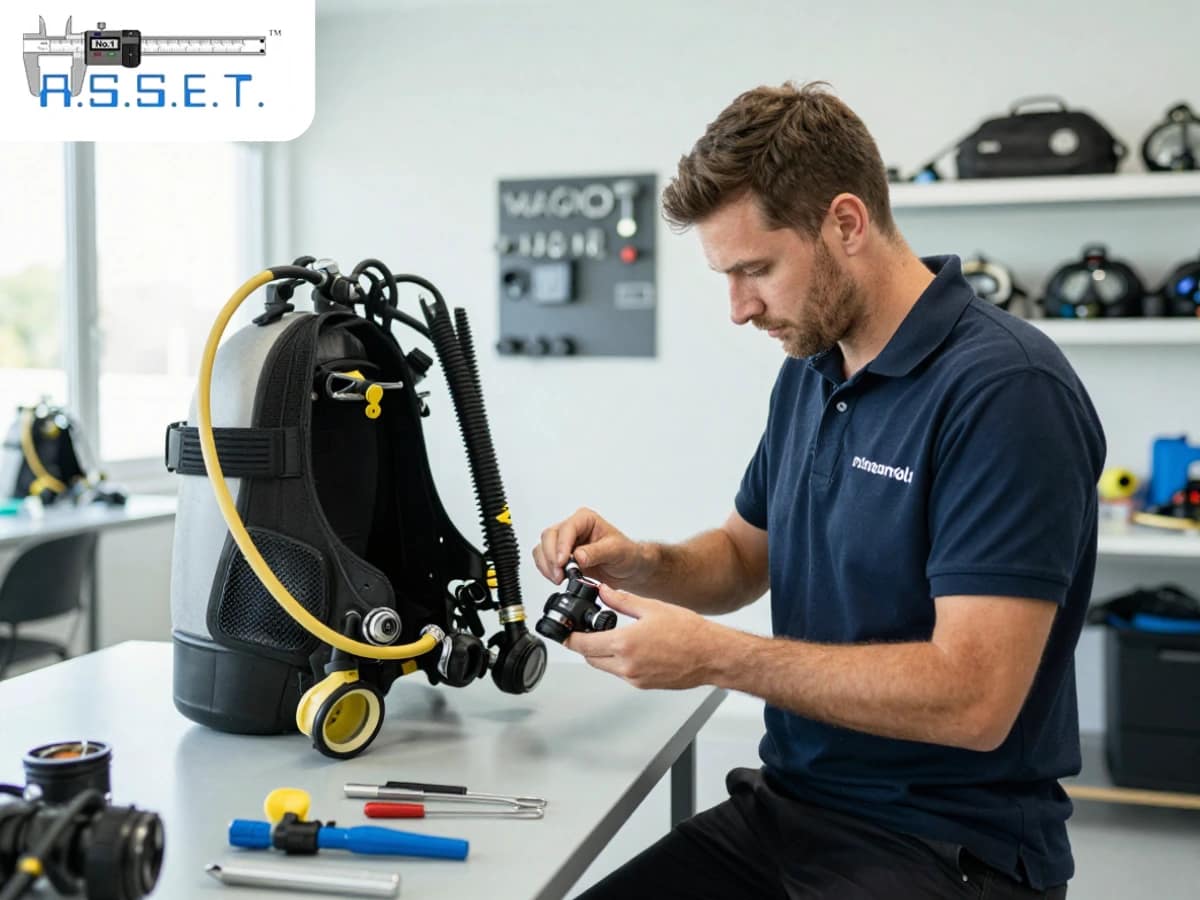
| Image Alt Text | Certified scuba technician servicing dive equipment in a professional workshop after completing ASSET Dive Industry Technician training. |
Short FAQ Section
Why do dive centres prefer certified scuba technicians?
Because certified technicians have completed structured training and are more likely to follow correct servicing, testing, documentation, and safety procedures.
Does scuba technician training include ISO and European standards?
ASSET training introduces technicians to relevant ISO, European, British, and industry standards where they apply to cylinder inspection, breathing air, oxygen systems, and service procedures.
Is practical workshop training important?
Yes. Dive equipment servicing cannot be learned properly through theory alone. Technicians need hands-on experience with real equipment, tools, faults, and testing procedures.
Can certification help a dive centre’s reputation?
Yes. Having trained technicians helps demonstrate that the dive centre takes equipment safety, customer confidence, and professional standards seriously.
Who should take professional scuba technician training?
Dive centre staff, instructors, service technicians, cylinder inspectors, compressor operators, technical divers, and anyone responsible for maintaining diving life-support equipment.