- Home
- Post Single Template
What Is Scuba Regulator Technician Training And Who Needs It?
Many regulator failures result from poor servicing rather than faulty equipment. A regulator is one of the most important pieces of scuba equipment. This is because it supplies breathing gas during every dive. Even a small servicing mistake can affect performance. It can put divers at risk.
Many divers spend a lot of money on quality equipment. But they forget that regular servicing matters just as much as the original purchase. Proper technical knowledge gives technicians the confidence to inspect and service regulators to the correct standards. This blog explains the purpose of Scuba Regulator Technician Training. We will also talk about the people who benefit from it.
Why Is Expert Regulator Servicing Needed?
It works under high pressure. Every dive places stress on internal parts such as O-rings, Seats, Springs, and Diaphragms. Many other things can also cause normal wear. This includes saltwater, sand, moisture, and frequent use. Regular servicing keeps the regulator working as the manufacturer intended. A trained technician will do the following
- checks every important component
- replaces worn parts
- performs pressure tests
- confirms that the regulator performs safely before it returns to service
Professional servicing also gives several long-term benefits.
- Improves diver safety
- Extends equipment life
- Reduces unexpected equipment failures
- Protects the manufacturer's servicing standards
- Gives divers confidence before every dive
Many equipment manufacturers recommend regular servicing every year and even after a specified number of dives. Following these recommendations helps maintain good performance.
Scuba Regulator Technician Training: Skills That Build Confidence
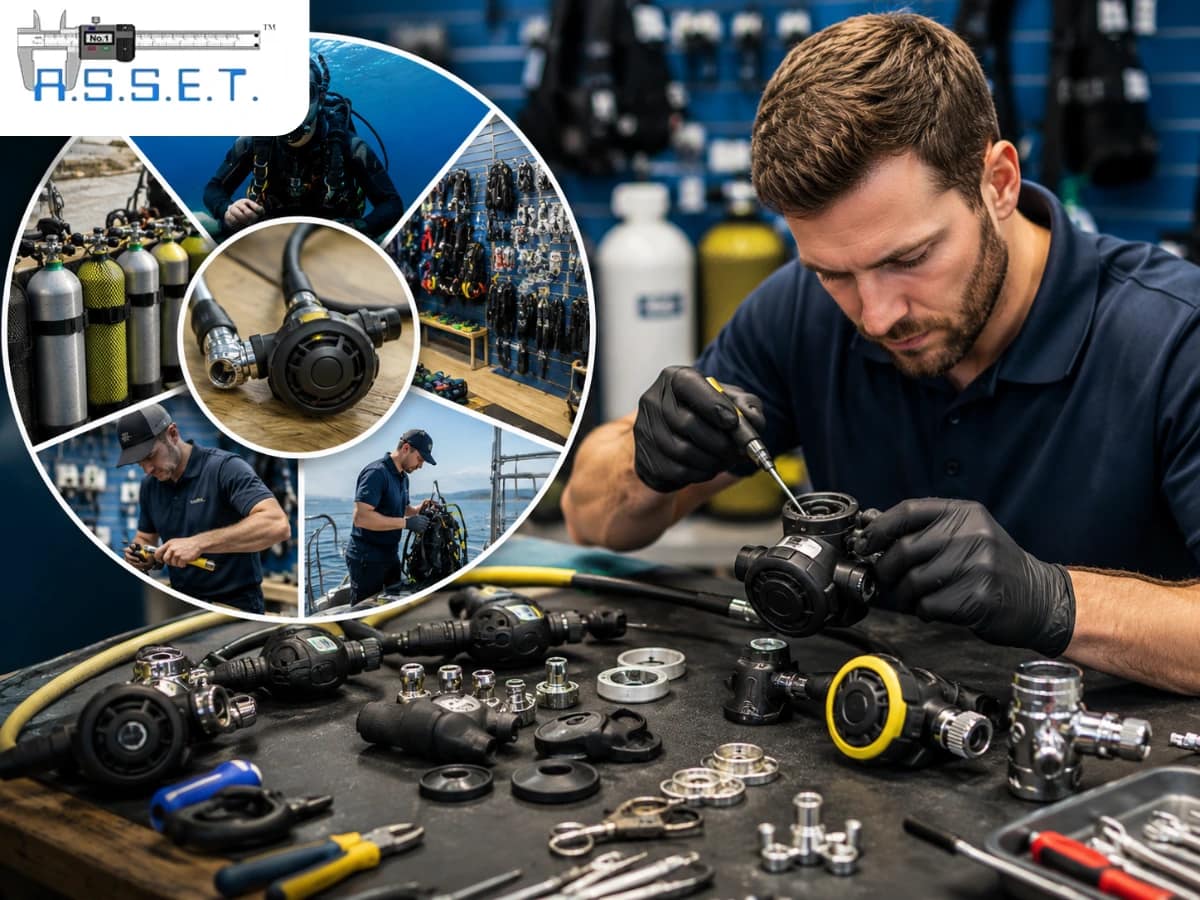
This education focuses on much more than replacing parts. Students learn the complete servicing process from inspection to final performance testing. A typical Scuba Regulator Technician Training includes subjects such as
| Training Area | Purpose |
| Regulator design | Builds a strong understanding of first and second stages |
| Safe disassembly | Prevents accidental damage during servicing |
| Component inspection | Identifies worn, damaged or corroded parts |
| Cleaning procedures | Removes salt, grease and contaminants safely |
| Correct lubrication | Protects seals without damaging equipment |
| Reassembly | Returns every component to the correct position |
| Pressure testing | Confirms reliable performance before use |
| Fault diagnosis | Identifies common servicing issues quickly |
Students also get practical experience with specialist servicing tools. Practical sessions improve accuracy before technicians work on customer equipment.
Scuba Regulator Technician Training
Learn to inspect, service, and maintain scuba regulators with expert-led, hands-on training. Build practical skills and gain the confidence to become a certified scuba regulator technician.
Who Benefits from This Type of Training?
Many people think technician education suits only full-time equipment engineers. But several groups benefit from it.
Dive Centre Staff
These places depend on rental equipment. Regular servicing reduces equipment downtime. It helps staff prepare regulators for diving seasons.
Dive Shop Owners
Equipment servicing adds value for customers. A qualified technician can inspect regulators. They can complete scheduled servicing. They can support customers with good maintenance.
Dive Guides
They spend many hours underwater. They inspect equipment before every trip. Better technical knowledge helps them recognise early signs of wear.
Commercial Diving Organisations
They depend on strict equipment maintenance. Qualified technicians support safe working conditions through accurate inspections and servicing.
Serious Recreational Divers
These people enjoy learning more about their equipment. Education gives them a better understanding of regulator operation.
Questions Many Future Technicians Ask
Many people considering this education share similar queries before enrolling. Some ask whether previous engineering experience is necessary. Most recognised programmes begin with the fundamentals. So motivated learners can learn step by step. Some people check if practical sessions are as important as theory. These two things support each other. Theory explains regulator operation. Practical work helps with proper servicing.
Another common question is manufacturer standards. Professional courses teach technicians to follow approved servicing procedures. This supports consistent results. It protects diver safety.
Choosing the Right Course
Students should spend time working with actual regulators instead of only reading manuals. When comparing different courses, look for these points
- Experienced instructors. They must have industry knowledge.
- Practical servicing sessions. This should be with proper tools.
- Training based on manufacturer recommendations where applicable.
- Checking of theory and practical expertise.
- Certification from a recognised dive industry training organisation.
- Continued support after course completion.
A good course gives students the following things
- confidence to work carefully
- follow correct procedures
- respect equipment safety standards
Common Misunderstandings
Myth: Any diver can service a regulator after watching online videos.
Fact: Regulators are life-support equipment. Expert servicing requires proper knowledge. You need specialist tools and recognised training.
Myth: A regulator only needs servicing when it stops working.
Fact: Many worn components show no obvious signs until they fail. Regular servicing reduces this risk.
Myth: Every regulator follows the same servicing process.
Fact: Different manufacturers use different designs and specifications. They use different service procedures.
Industry Standards Are Needed
Professional technicians follow approved servicing procedures instead of shortcuts. They inspect every component. They replace worn parts with the correct service kits.
They also record servicing details. They carry out final performance checks before returning equipment to service. This organised process gives confidence to dive businesses and individual divers.
Regular inspection and scheduled servicing are important parts of safe diving equipment maintenance. Industry recommendations also support the use of trained technicians for regulator servicing. This is because regulators are life-support devices.
A Simple Basis for Success
Experienced technicians often follow the same routine.
- Inspect the regulator before disassembly.
- Clean every component with approved equipment.
- Replace worn parts with the correct service kit.
- Reassemble the regulator according to manufacturer specifications.
- Test the regulator and confirm proper performance before use.
- Record the completed service for future reference.
This approach reduces mistakes. It supports good servicing.
Scuba Regulator Technician Training
Learn to inspect, service, and maintain scuba regulators with expert-led, hands-on training. Build practical skills and gain the confidence to become a certified scuba regulator technician.
Why This Education Gives Long-Term Value
For individuals
- it builds confidence
- improves career opportunities
- strengthens technical ability
For dive centres it supports
- better equipment availability
- stronger customer trust
- improved operational efficiency
For divers, it provides peace of mind. This is because qualified technicians maintain one of the most important pieces of life-support equipment.
Final Thoughts
Safe diving depends on
- equipment
- servicing
- knowledge
Regular maintenance extends regulator life. It improves reliability. It supports safer dives. Choosing recognised Scuba Regulator Technician Training gives technicians the practical expertise and confidence needed to service regulators correctly. They do this by following accepted industry standards.
If you want to learn servicing expertise and strengthen your dive centre's technical capability, check the ASSET Dive Industry Technician courses. Professional education is an investment that supports safer diving and satisfied customers. It also helps with good equipment performance for many years.
FAQs
Do these courses include practical workshop sessions?
Yes. Most have practical sessions where students inspect and assemble regulators under instructor supervision.
Can this centre benefit from an in-house technician?
Yes. They can reduce servicing delays and improve equipment availability. They can support consistent maintenance throughout the year.
Does certification expire?
Some remain valid. Others recommend refresher education. Check the requirements of the training organisation for current details.
What tools does a technician normally use?
They use specialist hand tools and ultrasonic cleaners. They use pressure gauges and testing equipment. They also use manufacturer-approved service kits.
Why do technicians keep service records?
These help to track maintenance history. They support future inspections. They provide useful information for equipment owners and service providers.

Recent Posts


Tags