Scuba Cylinder Visual Inspection Course: Learning to Identify Cylinder Damage Correctly
A scuba cylinder may look clean and ready for use. But it may be hiding damage that needs to be corrected. Rust inside the cylinder and a damaged valve connection may not be obvious during a routine check. These problems need proper assessment before the cylinder returns to service.
These devices store breathing gas under high pressure. Their condition therefore deserves more than a quick look at the paintwork. Technicians need to recognise signs of damage. They must understand the inspection criteria and record their findings correctly.
A Scuba Cylinder Visual Inspection Course gives aspiring technicians the knowledge to examine cylinders in a proper way. It teaches them not just to look at the surface appearance. It helps them to understand the possible significance of defects.
In this blog, we will look at the common types of damage. We will also explain why proper training is needed for people working with this equipment.
Never Miss Out On Correct Cylinder Inspection
This equipment operates under high pressure. A defect that appears small may need further investigation before it can be used safely.
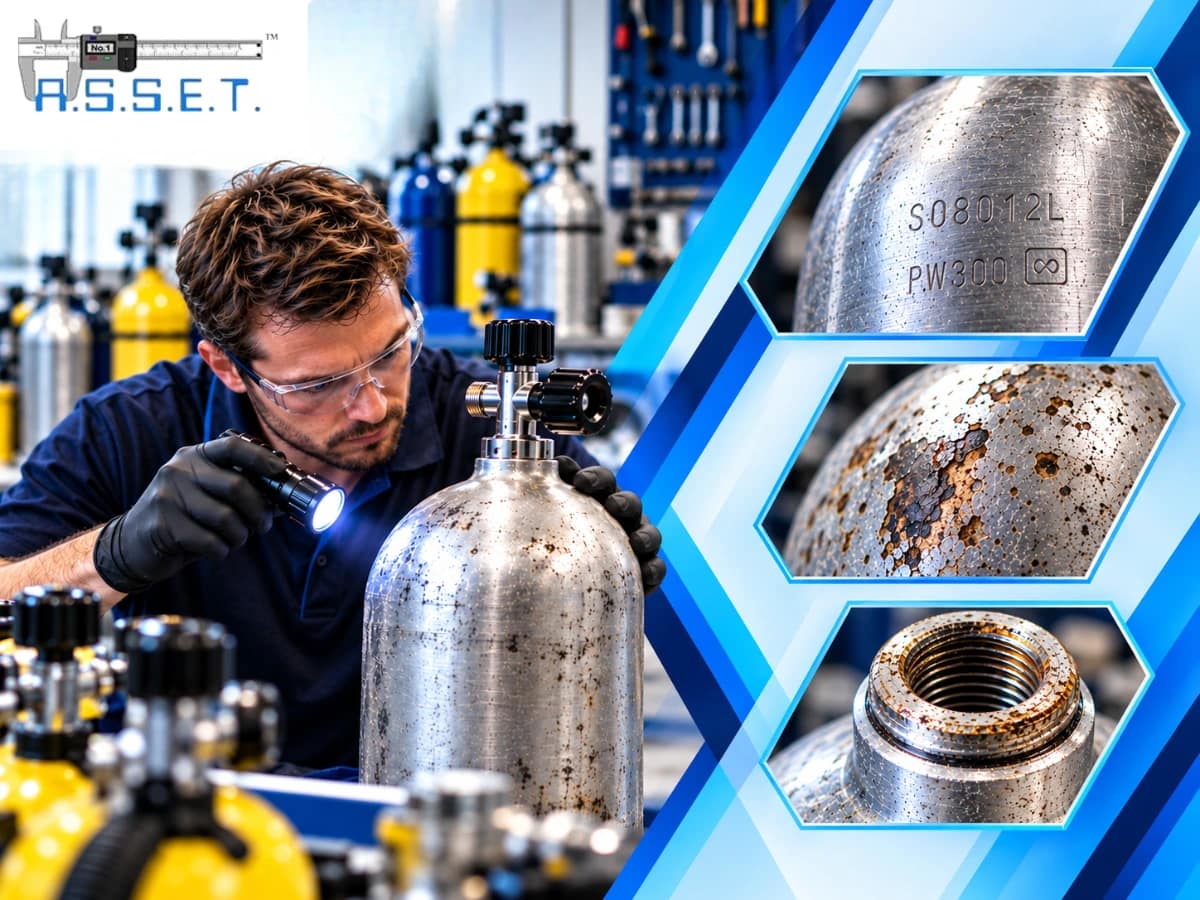
Surface rust on the outside does not mean a cylinder must be rejected. Its location and extent need to be assessed against the given criteria. Internal corrosion may be harder to spot. This is because it is hidden from view until the cylinder is examined using the appropriate procedure.
A technician must also distinguish between cosmetic marks and defects that affect the cylinder’s condition. Making decisions based only on appearance can lead to an unsafe cylinder being accepted and, at times, a serviceable cylinder being rejected unnecessarily.
Inspection is therefore a technical responsibility. It involves a systematic examination and an understanding of applicable standards. It is also about accurate documentation.

Things You Will Learn In A Scuba Cylinder Visual Inspection Course
1. Recognising External Corrosion
This is one of the defects technicians may encounter when examining this equipment. It can develop when metal is exposed to moisture and other conditions.
Dive centres operate in settings where cylinders may come into contact with water and salty air. Poor drying and storage can contribute to corrosion. During an external inspection, a trained technician examines the cylinder body and base for signs of deterioration. Rust and pitting may indicate different levels of damage. The expert needs to assess the affected area. They must not assume that every mark has the same significance.
Surface corrosion may be limited to the outer finish. Deeper corrosion can affect the metal itself and requires more careful assessment. The location and extent of the defect are important. A technician must compare the findings with the applicable rejection criteria and arrange further action when required.
A Scuba Cylinder Visual Inspection Course helps students understand these differences and develop a better approach to examining cylinder surfaces.
2. Identifying Internal Corrosion and Pitting
The inside portion also needs to be checked. Moisture and contamination inside the cylinder can contribute to corrosion, particularly when the equipment is not handled and stored correctly. Internal corrosion may not be visible during a routine external check. The technician needs to follow the correct inspection procedure. They must use suitable equipment to examine the internal surface.
Pitting is another concern. It refers to small, localised areas of metal loss that form depressions in the surface. These marks can vary in depth and distribution. Their significance depends on the cylinder material and the extent of the damage. A few visible marks do not automatically determine if a cylinder passes or fails. A competent inspector must assess the findings against the requirements.
Lighting and inspection equipment can give an idea about the defects that are difficult to see from the cylinder opening. The expert must also understand the limits of visual inspection. A defect that requires additional examination and testing cannot be cleared because it is difficult to see.
Training helps technicians recognise possible warning signs and identify when a cylinder needs more assessment.
3. Checking for Dents, Bulges and Deep Scratches
Cylinders can suffer physical damage during transport and storage. They may be knocked against hard surfaces and dropped onto the floor. The problem aspects need examination. Their position and severity can affect the decision about whether the cylinder remains suitable for service.
A dent is an inward deformation of the surface. A bulge is an outward deformation. A deep scratch may remove material. It may expose an area that needs closer examination. The technician should not judge a defect by its size alone. Its shape and effect on the cylinder must be considered according to the criteria. Paint damage is not necessarily structural damage. But removing and covering a mark without first assessing it may hide a more serious problem.
The correct approach is to document the finding and follow the required inspection procedure.
4. Examining the Neck and Thread Condition
The cylinder neck connects to the valve, making this area particularly important during inspection. The threads must be in suitable condition and compatible with the valve being fitted. Thread damage may result from incorrect fitting and wear. It can be due to corrosion and the use of incompatible components. Signs may include damaged thread surfaces, deformation/visible wear.
A visual check alone may not establish whether a thread meets the required tolerances. Appropriate thread identification and gauging procedures are needed where specified. Experts also need to understand that different thread forms exist. A valve that appears to fit may still be unsuitable if the connection does not match the cylinder’s specification.
Incorrect combinations can damage the connection and create serious safety concerns. A technician must follow the applicable procedures rather than rely on guesswork.
The ASSET course includes thread identification and gauging as part of its training. This helps students understand why the neck and valve connection need careful examination
5. Looking for Valve Damage and Other Defects
It controls the release of gas from the cylinder. So, its condition and connection need proper attention. Visible corrosion and damaged surfaces on the valve may indicate a need for further examination. The expert should also be alert to problems around the valve connection.
A visual check does not replace the correct valve inspection and servicing procedure. Some faults require additional checks by a suitably trained person. Cylinder inspection training introduces students to valve checks and basic maintenance awareness. It also helps them understand when a defect has to be addressed quickly.
Technicians should never ignore an unusual mark simply because the valve appears to operate normally. Each finding must be assessed according to the procedure.
6. Understanding Cracks and Suspicious Marks
A suspected flaw should not be dismissed as a scratch without proper assessment. Some defects may be difficult to identify without knowledge of the cylinder’s construction and likely failure points. The expert needs to recognise when a mark requires specialist examination and further testing.
Heat damage is another concern. Signs of fire exposure and other abnormal conditions may indicate that the cylinder needs a proper assessment. Refinishing the exterior does not resolve any underlying damage. The correct response to a suspected serious defect is to follow the applicable safety procedure. You also need to keep the cylinder out of service until its condition has been properly determined.
Training helps technicians understand the limits of their inspection role.
7. Recording Findings Accurately
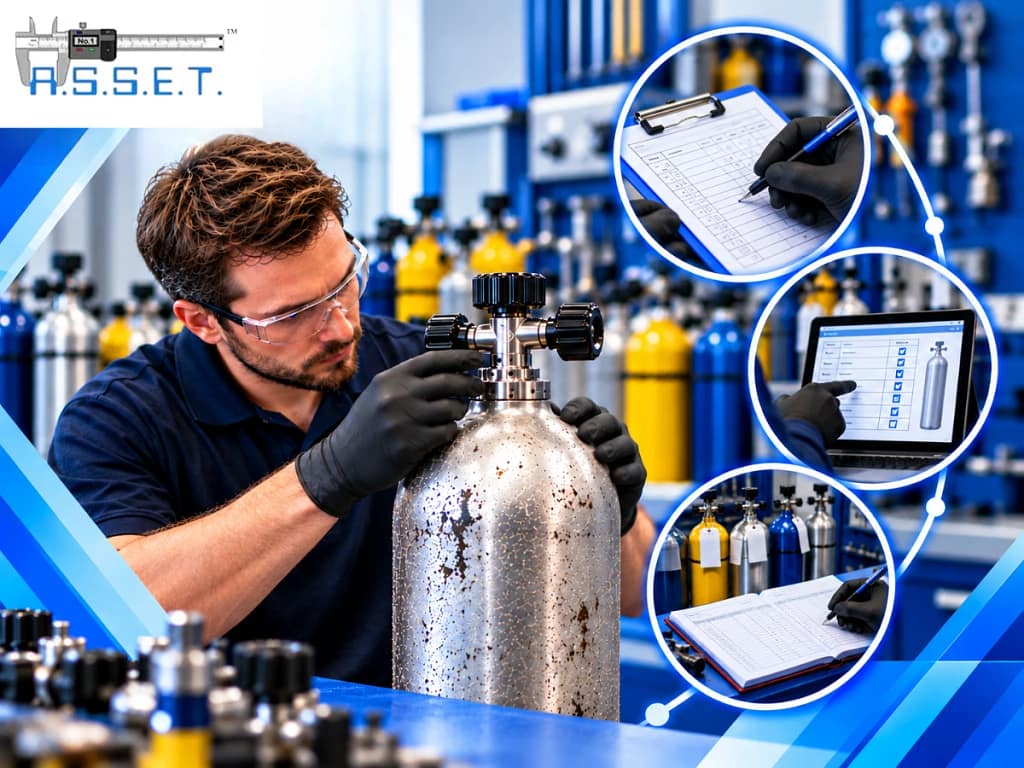
Inspection does not end when the physical examination is complete. Accurate records help establish the cylinder’s inspection history and explain the decision made by the technician. A record should contain the information required by the applicable procedure. Depending on the system used, this may include cylinder identification, findings, etc.
Clear documentation helps experts and dive centre managers track equipment condition. It can also help identify recurring problems. Poor records can cause confusion. Photographs may support the record when permitted by the inspection procedure. They should not replace the required written findings.
The ASSET course covers record-keeping and inspection documentation. This helps students understand the importance of traceable records alongside the practical examination.
What Does the ASSET Course Teach?
The ASSET Cylinder Visual Inspection Course-Part 1 is designed for people who are new to cylinder visual inspection. The programme runs over two days, with theory on the first day and practical workshop training on the second. The training covers several areas that support correct defect identification:
- Internal and external cylinder inspection.
- Recognition of corrosion and physical damage.
- Cylinder valve checks and basic maintenance awareness.
- Thread identification and gauging.
- Relevant inspection standards and codes of practice.
- Record keeping and documentation.
The value of this training lies in connecting technical knowledge with practical work. Students learn to consider the significance of a defect rather than simply memorising a list of visible problems.
Final Thoughts
Recognising cylinder damage correctly requires knowledge and a consistent inspection process. Different issues can have different implications depending on their location and severity. Experts must assess each finding against the given criteria. They must not rely on appearance alone. They also need to record results clearly and understand when further testing and specialist assessment is required.
A Scuba Cylinder Visual Inspection Course can help people develop the knowledge needed for this work. Dive Technician’s ASSET Part 1 programme combines theory and practical workshop training. It introduces students to cylinder inspection procedures and common defects.
If you work with scuba equipment and plan to develop your expertise as a dive technician, proper training is a useful starting point.
FAQs
What damage can be found during a scuba cylinder visual inspection?
An inspection may identify corrosion, pitting, dents, bulges, deep scratches, damaged threads, and other suspicious marks. The technician must assess each finding against the applicable inspection criteria.
Can external inspection identify internal cylinder corrosion?
No. An external check cannot establish the full condition of the inside surface. The cylinder must be examined internally using the correct procedure and suitable equipment.
Does every rusty scuba cylinder need to be rejected?
No. The decision depends on the location, extent, and severity of the corrosion and the relevant rejection criteria. A trained inspector must assess the defect before deciding on the next step.
Is visual inspection the same as hydrostatic testing?
No. Visual inspection examines the cylinder’s condition, while hydrostatic testing assesses its behaviour under a prescribed pressure test. One does not automatically replace the other; the required procedures depend on the applicable rules and inspection schedule.
Who can take the ASSET Cylinder Visual Inspection Course – Part 1?
The course is suitable for people new to cylinder visual inspection and states that there are no prerequisites. It combines theory with practical workshop training over two days. Check the course page for current details.