What to Expect from an ASSET Scuba Service Technician Training Course
Scuba diving depends on safety. Every diver depends on well-maintained equipment before entering the water. A trained technician services and maintains this equipment. This is to keep divers safe. Many people who want to work in the dive industry choose professional technical training to build these skills. Before joining a course, many students also search for details about the ASSET Scuba Service Technician course structure and career benefits.
A good training programme prepares students for real work in commercial diving operations and equipment service facilities. The course focuses on practical learning.
Understanding the Course Structure for ASSET Scuba Service Technician
The ASSET Scuba Service Techniciancourse must provide quality training and expert instruction. A good course has classroom knowledge and hands-on training. Students usually begin the course with an introduction to the dive industry. Trainers explain the role of a technician. They emphasize the importance of equipment maintenance. This section helps in building a strong foundation for the rest of the training.
The programme then moves into technical subjects related to diving equipment. Students learn about:
- Regulators
- Cylinders
- Valves
- breathing systems
Trainers present industry standards and safety rules that technicians follow during equipment servicing. The course includes several modules that focus on specific equipment systems. Students study each component in detail. They gain confidence in working with professional tools. Many programmes also include online learning sessions. These sessions help students understand technical principles before entering the workshop. After the theory sessions, practical training takes place in a setting that is controlled. Here, instructors help students through service procedures.
Learning from Industry Experts
Experienced instructors help students throughout the training programme. These trainers bring many years of technical experience from the diving industry. They share examples from commercial diving projects and equipment servicing settings. Students get insight into common equipment problems that are faced by technicians in daily work. Trainers also explain the importance of careful inspection and proper servicing procedures. This helps students develop professional habits from the beginning of their careers. Students learn the value of accuracy and safety when working with life-support equipment. The interaction between students and instructors also creates a supportive learning space. Students ask questions. They discuss technical problems. Also, they practise solutions during workshop sessions.
Hands-On Technical Training with Equipment
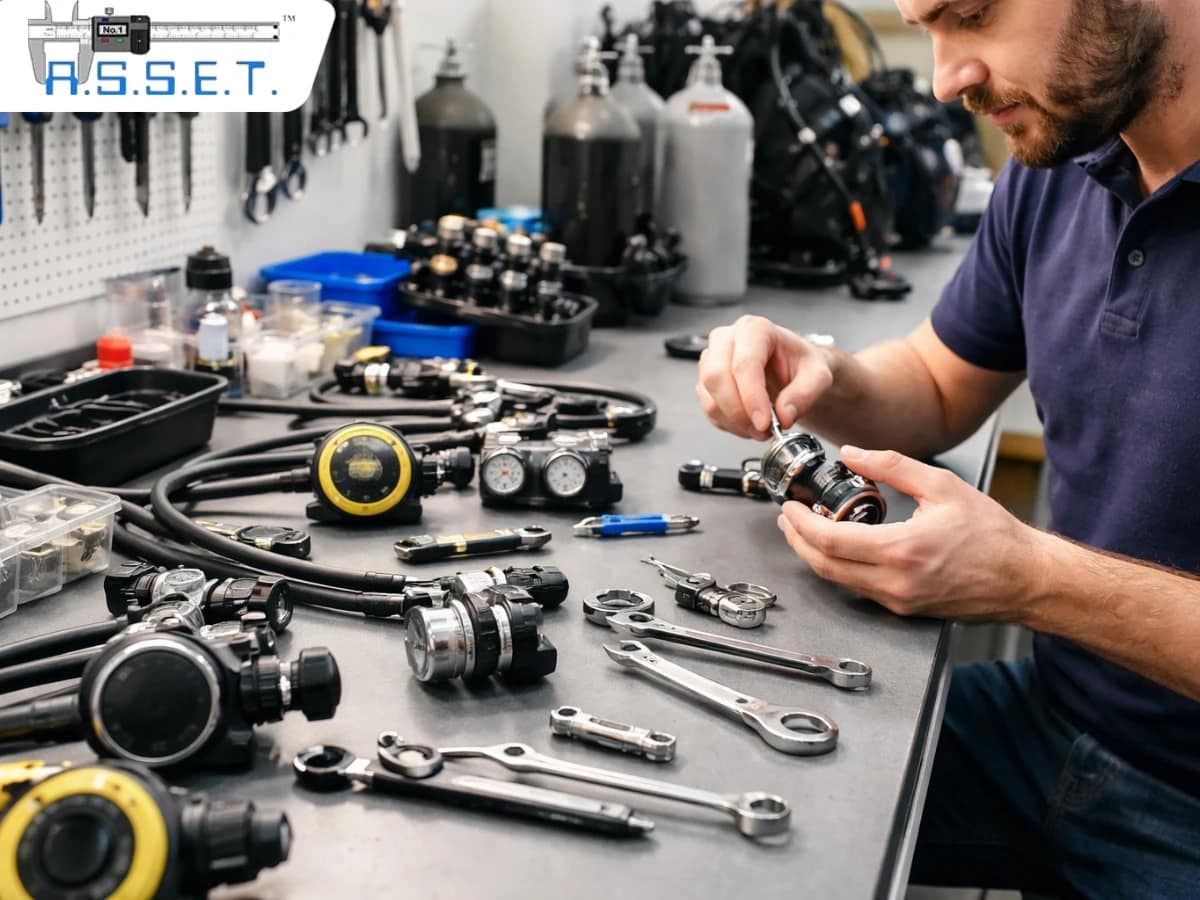
Students work with dive equipment under the supervision of experienced instructors. This approach helps in building confidence. It prepares students for real service tasks. Students learn to inspect regulators. Also, they learn to identify worn and damaged parts. In addition, it also practices the disassembly and reassembly of equipment components. Each step follows strict industry standards.
Cylinder inspection forms another important part of training. Students study visual inspection procedures. They learn the purpose of hydrostatic testing. These processes protect divers from equipment failure during underwater operations. Students also study air quality and breathing gas safety. Training includes knowledge related to breathing air testing and equipment maintenance.
This practical experience leads to a recognized Scuba Equipment Service Certification. This shows that the technician meets professional technical standards. Hands-on learning also builds problem-solving skills. Students analyze equipment faults. They identify the steps of correct repair.
Certification Is Important
After completing the coursework and practical sessions, students receive accreditation. This confirms their technical skills. This recognition shows that the technician meets industry expectations and safety requirements. Employers value certified technicians. This is because they maintain high equipment standards.
The certification also supports career growth. Technicians gain opportunities to work with international dive operations and training centres. Many students also continue their learning journey after completing the initial course. Advanced modules focus on:
- composite cylinder evaluation
- cylinder inspection
- air testing
These additional courses help in expanding technical knowledge and career potential. Students who study technical service training gain a respected position within the diving community.
Building Skills for a Career in the Dive Industry
A technician training course opens many career opportunities. Dive centres and commercial diving companies require trained professionals who maintain equipment safely. Students who complete the course gain technical knowledge that supports many roles within the industry. Some technicians work in dive shops and service regulators. Others
Other technicians work in commercial diving places. Here, strict safety standards are followed in equipment maintenance. Training also develops valuable skills such as
- equipment diagnostics
- technical documentation
- safety compliance.
These abilities improve a technician’s professional profile. They increase employment opportunities. Students also get confidence in working with specialised tools. This knowledge strengthens their ability to support dive operations. Dive centres prefer technicians who understand global standards and service procedures.
Conclusion
A professional training course prepares students for an important role in the diving industry. Technicians maintain equipment that divers trust with their lives. This responsibility requires technical knowledge and practical experience. Students who join a technician programme receive hands-on practice and training from experienced professionals.
When choosing a training programme, many people review the price of the ASSET Scuba Service Technician. This is because it shows the value of professional education and practical experience. This training is a strong starting point for individuals looking for a career in equipment servicing and dive safety. A programme offered by dive-technician.com prepares technicians for long-term success in the global diving industry.
FAQs
Can a technician work internationally after completing certification?
Many dive centres across the world respect professional technician certifications. This supports international employment opportunities.
Does a technician course include practical equipment servicing?
Yes. Students practise inspection and cleaning. They also practise maintenance of dive equipment during workshop sessions.
Who usually joins this training programme?
Divers and dive instructors join it. Also, dive shop staff and people interested in technical careers in the diving industry join this training programme.
Do technician courses cover cylinder inspection training?
Many programmes include specialised training related to cylinder inspection. It includes safety checks and breathing air standards.
Do dive centres prefer certified technicians?
Yes. This is because they follow recognised industry standards for equipment maintenance and safety.