Be the Cylinder Expert Your Customers Demand – Enroll in the ASSET Cylinder Hydrostatic Testing Course
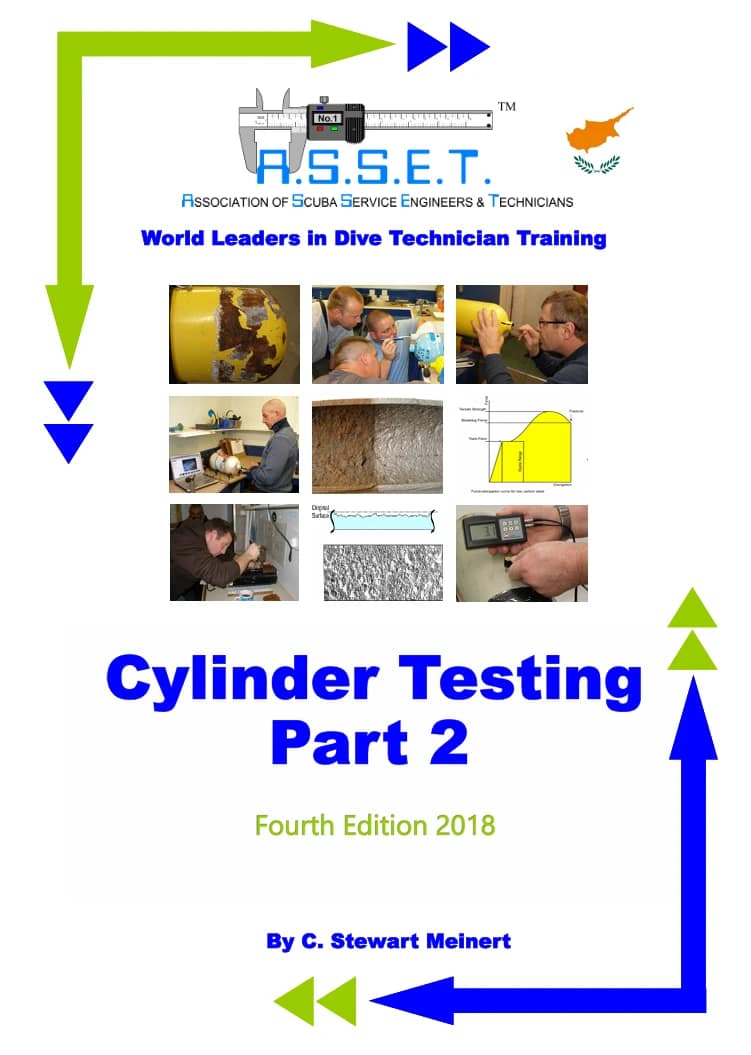
Advanced Cylinder Hydrostatic Testing Course – Metallurgy, Inspection, and Crack Detection – Updated to include ISO 18119:2018
- Training course syllabus (CPL1 + CPL2)
- Course duration: 2 days
- Academic development: 1 day (Online or Classroom)
- Workshop experience: 1 days

Be the Cylinder Expert Your Customers Demand – Enroll in the ASSET Cylinder Hydrostatic Testing Course
Cylinder Hydrostatic Testing Course (Part 2)
Professional Hydrostatic Testing Training | CPD Aligned
The ASSET Cylinder Hydrostatic Testing Course (Part 2) is a focused, practical programme for technicians who want to move beyond visual inspection and carry out full pressure testing of cylinders properly and confidently.
This course builds directly on Cylinder Visual Inspection (Part 1) and is designed for those who are already working with cylinders and want to take the next step into testing, certification, and decision-making.
About the Course
Hydrostatic testing isn’t just about using the machine.
It’s about understanding what the cylinder is doing under pressure — and knowing how to interpret the results correctly.
Over two days, you’ll work through both the theory and the practical side of testing, including how to identify failure, how to apply limits, and how to make decisions you can stand behind.
The aim is simple:
To give you the confidence to carry out testing properly, consistently, and in line with recognised standards.
Course Structure
- Duration: 2 Days
- Theory + Practical Combined
- Hands-on workshop assessments included
This is a practical course. You will be working with real equipment, not just learning from slides.
Who This Course Is For
- Technicians who have completed Cylinder Visual Inspection (Part 1)
- Dive Industry Technician Course (DITC) students
- Cylinder inspectors looking to move into testing
- Dive centres wanting in-house testing capability
This is not an entry-level course — it is for those already involved in inspection work.
What You’ll Cover
- Hydrostatic testing procedures and setup
- Understanding expansion (elastic vs permanent)
- Interpreting test results and limits
- Principles of metallurgy and how materials behave under pressure
- Crack detection methods, including eddy current awareness
- Identifying failure conditions and condemnation criteria
- Recording results and maintaining traceable documentation
Everything is taught with a focus on real decisions in real working environments.
Standards & Compliance
This course is aligned with recognised inspection and testing practices, including:
- ISO 18119 (current requirements and updates)
- EN / BS standards
- CGA guidance where applicable
There is increasing emphasis across Europe on “competent and approved” testers.
This course helps ensure you meet those expectations — not just in theory, but in practice.
Why This Course Matters
Hydrostatic testing is where decisions are made.
- Does the cylinder pass?
- Does it fail?
- Is it safe to return to service?
These decisions carry real responsibility.
This course gives you:
- The understanding behind the numbers
- The ability to recognise problems early
- The confidence to make the right call
Key Benefits
- Hands-on hydrostatic testing experience
- Clear understanding of expansion limits and failure criteria
- Practical insight into metallurgy and material behaviour
- Introduction to crack detection methods
- Training aligned with recognised international standards
- Supports professional, defensible decision-making
Certification
On successful completion, you will receive:
ASSET Cylinder Hydrostatic Testing Certificate
This confirms that you have completed structured training and can carry out hydrostatic testing in a professional working environment.
What’s Included
- Full training manual (printed copy required)
- Academic instruction and workshop training
- ASSET hydrostatic course handbook
- Certification
Flexible Learning Option
If you complete the academic component online and pass the assessment, you can attend the practical training later — up to 12 months after completion.
You also have the option to revisit the theory in a classroom setting if needed.
A Practical, Straightforward Approach
This course avoids unnecessary complexity.
You will not be taught “black art” techniques or shortcuts.
You will learn how to test cylinders properly, safely, and in line with recognised practice.
Ready to Progress?
If you’re already inspecting cylinders and want to move into testing and certification, this is the next step.
👉 Enquire now
👉 View course dates
👉 Contact ASSET
What Will I Learn?
- This Cylinder Hydrostatic Testing Course is designed to enhance the skills of cylinder technicians through rigorous training and practical assessments. Participants will learn essential hydrostatic inspection techniques, ensuring they are well-equipped to perform thorough inspections. Upon successful completion, candidates will receive the prestigious ASSET Cylinder Hydrostatic Testing Course certification, validating their expertise in the field.
- The ASSET 2-day CYLINDER TESTING COURSE (Part 2) – ADVANCED is aimed at the experienced Cylinder Tester/DITC candidates.
- Syllabus includes:
- Understand the principles of metallurgy as they apply to cylinder materials.
- Implement effective inspection techniques in line with international standards.
- Employ advanced crack detection methodologies and tools.
- Determine the integrity and safety of cylinders through hydrostatic testing.
- Document and report inspection findings accurately.
- Inspection in accordance with ISO18119, CGA, EN, & BS standards
Course Content
Cylinder Testing Course Part 2
-
Course Programme
-
Introduction
-
About the Author
-
1. GLOSSARY
-
2. METALLURGY AND CORROSION
-
Terminology
-
Heat Treatment
-
The Atomic / Crystal Structure
-
Alloys
-
Steel
-
Heat Treatment of Steels
-
Hardening and Tempering
-
Aluminium Silicon Alloy
-
Heat Treatment of Aluminium Silicon Alloy
-
Adding Other Alloying Elements
-
The following three aluminium alloys have been used for cylinder manufacture:
-
Stress, Deformation and Set
-
Annealing
-
Hot Working
-
Effects of Heat
-
Hardness Testing
-
Calculating the Hardness Number
-
Aqueous Corrosion
-
The Corrosion Cell
-
Factors that Affect Electrolytic Action
-
The Electromotive Series
-
The Galvanic Series
-
Sacrificial Anode
-
Galvanising, Hot Sprayed Zinc and Zinc Rich Paint
-
Large Cathode, Small Anode Effect
-
Passive Film and Loss of Passivity
-
The Concentration Cell
-
Crevice Corrosion
-
Corrosion of Steel
-
3. INSPECTION MEASUREMENT AND DETERMINATION
-
Preparation
-
External Cleaning
-
Internal Cleaning
-
Rejection Criteria
-
Bulge
-
Dent
-
Dent – Example
-
Cut or Gouge
-
Crack
-
Fire Damage
-
Lamination
-
Neck Crack
-
Tap Marks
-
Plug or Neck Insert
-
Stamping
-
Arc or Torch Burns
-
Suspicious Marks
-
Vertical Stability
-
Chain Pitting or Line Corrosion
-
Isolated Pits
-
Local Corrosion
-
General Corrosion
-
Crevice Corrosion
-
Supplementary Tests
-
Decision Making
-
Inspection and Test Periods
-
Additional Points to Consider
About the instructor
12 Courses
4 students

Material Includes
- The course material is fully illustrated with high-quality detailed pictures
Audience
- ASSET Visual Inspection Course candidates, this course is you next step forward has a cylinder technician. Enroll in the ASSET Cylinder Hydrostatic Testing Course straight after your DITC or your Visual Inspection Courses!